Understanding Compliance Documents for Battery-Powered Consumer Products
Battery-powered consumer goods travel with a stack of compliance paperwork before they reach retail shelves. Here's what each document actually does and where teams typically slip up.
Understanding Compliance Documents for Battery-Powered Consumer Products
A rechargeable handheld fan, a cordless vacuum, a Bluetooth desk lamp, or a portable power station may all look like simple electronics on the shelf, but every one of them travels with a thick envelope of paperwork before it reaches a buyer. That paperwork is not bureaucracy for its own sake. It is the bridge between a manufacturer's design and a regulator's confidence that the product will not burn, leak, poison, or interfere with anything once it lands in a customer's home.
For sourcing teams, brand owners, and retail category buyers, reading this stack of documents correctly is just as important as the product itself. A single missing certificate can hold a shipment at customs, suspend a marketplace listing, or trigger a buyer audit. Below is a practical guide to what those documents are, what they actually mean, and where teams most often slip up.
The Core Compliance Document Stack

Battery-powered products typically require documents across four overlapping layers: electrical safety, electromagnetic compatibility, environmental substance control, and battery transport. They look interchangeable at a glance but they cover very different questions.
Safety Test Reports and Certificates
A safety test report is the output of an accredited third-party laboratory after the product is evaluated against a specific standard. The corresponding certificate is the formal declaration issued by a certification body once the test report is accepted.
For most consumer electronics powered by lithium-ion cells, the relevant standards include:
- **IEC 62133-2** for portable lithium cells
- **UL 2054** or **UL 2056** for household and commercial batteries in the United States
- **IEC 62368-1** for audio, video, and ICT equipment, which has largely replaced the older 60950 and 60065 standards
- **EN 60335-2-80** for fans and similar appliances in the EU
- **AS/NZS 60335.2.80** for the equivalent Australian and New Zealand standard
The certificate is only as useful as its scope. A scope line that says "tested at 25°C ambient, single cell configuration, AC adapter model X" will not cover a variant sold with a different adapter, in a different housing, or at a different charge rate. This is one of the most common reasons importers are forced to retest an entire SKU family.
Declarations of Conformity
A Declaration of Conformity (DoC) is the document where the manufacturer or its authorized representative formally states that the product meets every applicable directive. The DoC is a legal statement, not a test result. It must reference the relevant directives, list the harmonized standards applied, identify a signatory, and include the product's identifying details.
In the EU, a DoC must exist for every CE-marked product placed on the market, and regulators can request it at any point during the product's life. The UK uses a parallel UK Declaration of Conformity for UKCA-marked goods. Australia does not require a DoC in the same format, but suppliers must hold evidence of compliance on file and produce it on request.
EMC and Radio Test Reports
If a product contains any wireless function — Bluetooth, Wi-Fi, NFC, or even a wireless charging coil — it falls under radio equipment rules and must be evaluated for electromagnetic compatibility and efficient spectrum use.
- **United States:** FCC Part 15 for unintentional and intentional radiators
- **European Union:** Radio Equipment Directive 2014/53/EU (RED)
- **United Kingdom:** Radio Equipment Regulations 2017
- **Australia and New Zealand:** ACMA supplier declarations under the Radiocommunications Act
A common mistake is treating EMC and radio as separate, optional tests. For battery-powered products with wireless charging, both radiated emissions and radio performance are usually required.
Substance, Recycling, and Transport Documents
This is the layer most often handled by the cell supplier rather than the finished-goods assembler, but the brand owner carries the legal exposure.
- **Material declarations** under RoHS (EU Directive 2011/65/EU), REACH (EC 1907/2006), and California's Proposition 65 address restricted substances.
- **Battery-specific substance rules** in the EU fall under the recast Battery Regulation 2023/1542, which replaced the older Battery Directive 2006/66/EC and adds due-diligence obligations for cobalt, lithium, natural graphite, and nickel.
- **Safety Data Sheets (SDS)** are required for cells above certain thresholds and for shipping classification.
- **UN 38.3** is the transport test standard for lithium cells, covering altitude simulation, thermal stress, vibration, shock, external short circuit, impact, overcharge, and forced discharge. No carrier — air, sea, or road — will accept lithium batteries without a current UN 38.3 test summary.
Market-Specific Requirements at a Glance
United States
- FCC certification or a supplier's declaration of conformity, depending on whether the device contains an intentional radiator
- UL or ETL listed mark to satisfy most retailers' safety programs
- California Prop 65 warnings where applicable
- CPSC tracking label and conformity certificate for products subject to consumer product safety rules
- Energy-efficiency disclosures for battery charging systems under the DOE framework
European Union
- CE marking covering applicable directives (EMC, LVD or the new RED, RoHS, Battery Regulation)
- EU Declaration of Conformity
- WEEE registration in each member state where the product is placed on the market
- Battery registration with the responsible producer responsibility organization in each member state
- REACH SCIP database notification for articles containing substances of very high concern
United Kingdom
- UKCA marking for goods placed on the GB market; CE remains accepted for most product categories under current transition arrangements
- UK Declaration of Conformity
- WEEE and battery scheme registration with an approved compliance scheme
Australia and New Zealand
- RCM (Regulatory Compliance Mark) on the product, indicating registration with the EESS database
- SAA approval or equivalent for electrical safety
- ACMA compliance for wireless functions
- Battery stewardship registration under the B-cycle scheme in Australia
How Compliance Documentation Supports Retail Onboarding
Compliance paperwork is no longer just an import formality. It is a procurement gate.
Major marketplaces require sellers to upload test reports and certificates before listing electrical products. Categories like batteries, power banks, and heating appliances are subject to additional checks, and a listing without a complete document trail is usually rejected at submission or removed shortly after a category review.
Brick-and-mortar retail is more demanding still. Vendor portals routinely request:
- A bill of materials with restricted substance declarations
- Model-specific test reports rather than family-wide summaries
- Evidence of factory social audits and quality management systems such as ISO 9001
- Country-of-origin declarations
- Child-resistant packaging certifications where batteries are user-replaceable
When the same product is sold in multiple regions, retailers expect a single master compliance file plus region-specific supplements. Sourcing teams that organize documents around model numbers rather than markets tend to lose weeks during expansion into a new country.

Documentation Gaps That Delay Market Entry
In our review of common buyer-claim rejections, several patterns repeat.
- **Expired certificates.** UL, CE, and FCC marks are tied to annual or periodic renewal. A certificate issued several years ago may not cover the current production run.
- **SKU family mismatch.** A test report for the base model does not cover variants with different battery capacities, chargers, or housing materials, even if the change seems cosmetic.
- **Missing translations.** User manuals and safety warnings must be in the official language of each market. English-only manuals cause product seizures in several EU member states.
- **Inconsistent labeling.** The model number on the certificate, the label on the product, the FCC ID lookup, and the packaging must all match. A single mismatch is enough to halt customs clearance.
- **No DoC signatory on file.** Some factories issue a DoC but cannot name a person inside the company with authority to sign it. EU regulators treat this as no DoC at all.
- **UN 38.3 missing or older than the cell version.** Cell suppliers sometimes ship a new chemistry under an older transport certificate. Carriers will refuse the load.
- **WEEE and battery producer registration skipped.** Even with a perfect CE or FCC file, a product cannot be legally placed on the market in many EU countries without a producer registration number on the label or paperwork.
Each of these gaps is fixable, but only if a sourcing team catches them before purchase orders are placed. The cost of correcting paperwork after a container has been produced shows up as shipment delays, listing suspensions, and brand reputation damage rather than as a clean line item.
Where to Get Compliance Support
For teams building a battery-powered consumer product from scratch, the compliance document stack should be planned alongside the industrial design, not after tooling is complete. A supplier that maintains up-to-date test reports, regional registrations, and bilingual labeling templates can shave months off a market launch.
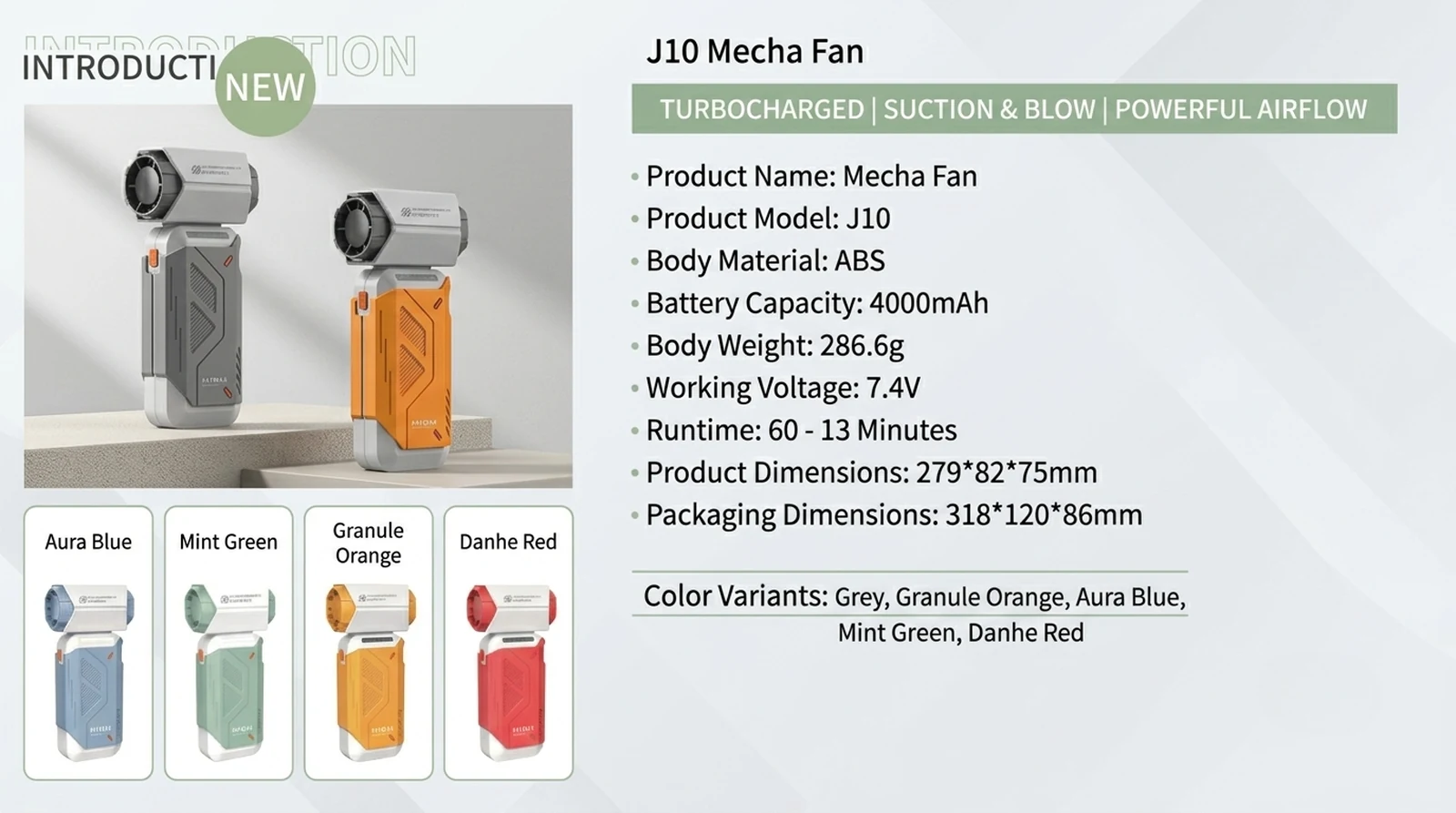
Teams sourcing portable fan platforms, for example, will find that mature categories like the [J10 Mecha Fan](https://jlhy.cc/products/j10-mecha-fan/) at jlhy.cc come with documentation organized around the markets they are sold into, which is the model worth replicating in any private-label program.
Working with a sourcing partner that treats compliance files as a living deliverable — not a one-time certificate — is the single biggest lever for getting battery-powered products onto retail shelves without reworking paperwork at the dock.

Frequently Asked Questions
**What is the difference between a test report and a certificate?**
A test report is the raw output of a laboratory evaluation. It lists the standard, the test conditions, and the results. A certificate is the formal document issued by a certification body after reviewing the test report and confirming that the product meets the standard. Test reports are evidence; certificates are attestation.
**Do I need a UN 38.3 report if my product ships by ocean freight only?**
Yes. UN 38.3 is required for transport by air, sea, road, or rail. The cell supplier must hold a current UN 38.3 test summary for every lithium chemistry shipped, and freight forwarders will check it before booking.
**How long are compliance certificates valid?**
It depends on the standard and the certification body, but most electrical safety certificates are valid for three to five years, provided the product design, components, and factory location do not change. EMC and radio certificates are usually tied to a specific hardware revision and must be retested when the design changes materially.
Frequently Asked Questions
What is the difference between a test report and a certificate?
A test report is the raw output of a laboratory evaluation. It lists the standard, the test conditions, and the results. A certificate is the formal document issued by a certification body after reviewing the test report and confirming that the product meets the standard. Test reports are evidence; certificates are attestation.
Do I need a UN 38.3 report if my product ships by ocean freight only?
Yes. UN 38.3 is required for transport by air, sea, road, or rail. The cell supplier must hold a current UN 38.3 test summary for every lithium chemistry shipped, and freight forwarders will check it before booking.
How long are compliance certificates valid?
It depends on the standard and the certification body, but most electrical safety certificates are valid for three to five years, provided the product design, components, and factory location do not change. EMC and radio certificates are usually tied to a specific hardware revision and must be retested when the design changes materially.