How First-Time Importers Can Evaluate a China Personal Care Appliance Supplier
Choosing the right Chinese supplier for personal care appliances is less about the product listing and more about the supplier's verifiable signals. This guide walks first-time importers through a structured evaluation process.
Why Supplier Vetting Matters More Than the Product Itself
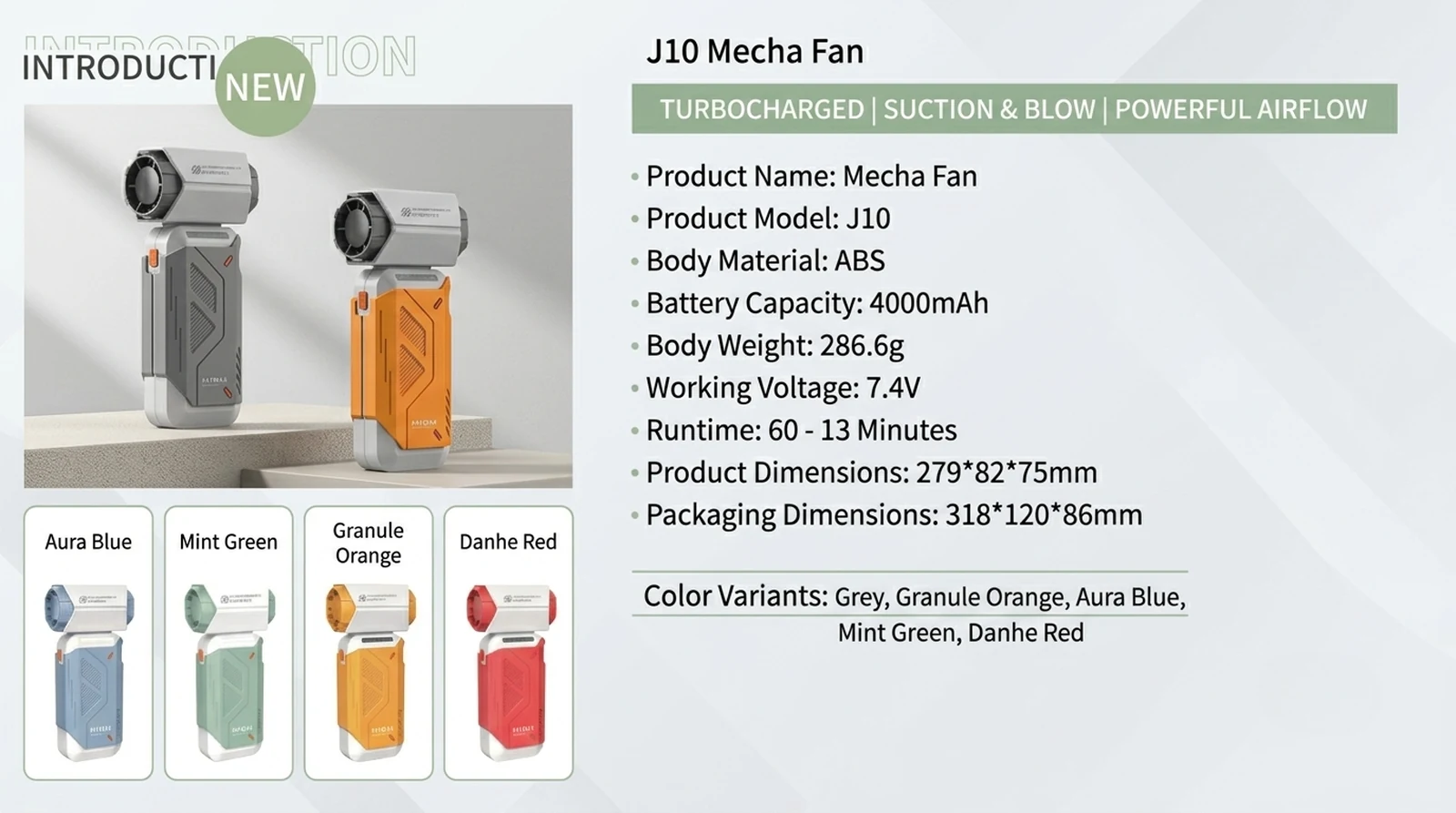
For first-time importers, the temptation is to start with the product — its feature list, render images, and headline specifications. In practice, the product is only as reliable as the factory behind it. A hair dryer with impressive SKU images and a mecha-style portable fan with sleek concept renders can both be sourced from factories that operate at very different levels of maturity, compliance, and responsiveness. The due diligence you do before wiring a deposit protects not only your margins but also your reputation downstream.

Personal care appliances — hair dryers, curling wands, facial cleansing devices, portable fans — sit in a category where end users care deeply about safety, electrical compliance, and consistent quality. A single batch failure or a regulatory miss in your destination market can derail a launch. Evaluating a supplier is therefore less about finding the cheapest option and more about finding a partner whose claims you can verify.
The Factory Profile: Capacity, Team, and Track Record Signals
Reading Between the Lines of a Factory Introduction
Every Chinese supplier will send an opening introduction. The trick is to read it for substance rather than surface polish. A credible factory profile typically includes the legal entity name, the year the business was established, the registered factory address (not just a trading-company office), the production floor area, headcount, and the categories of products manufactured. If a supplier says they are a "manufacturer" but their profile lists dozens of unrelated product categories with no apparent connection, that is a flag — vertically integrated factories tend to focus on a narrower set of capabilities.
You should also ask who owns the business and how long the current ownership has been in place. A factory that has changed hands multiple times in a short period may have unstable processes. Equally, a factory that has been under the same operator for many years, with a documented export history, is generally a lower-risk partner for a first-time importer.
Production Capacity Indicators You Can Verify
Numbers in a profile are easy to inflate. The objective is to find indicators you can cross-check. Look for:
- **Monthly output ranges stated in units** rather than vague phrases like "large capacity."
- **Production line count** alongside the typical number of workers per line.
- **Lead time statements** broken down by sample, bulk, and peak season.
- **A documented export history** to specific regions (EU, North America, Southeast Asia, Middle East) — destination markets often imply compliance familiarity.
- **Mention of in-house tooling, injection molding, or assembly vs. subcontracted processes** — full-stack factories reduce dependency risk.
If you want a reference profile that demonstrates the kind of structured information a B2B-importer should look for, browse a working example such as the J10 Mecha Fan product page at [jlhy.cc/products/j10-mecha-fan/](https://jlhy.cc/products/j10-mecha-fan/). Treat it as a benchmark: how transparent is the supplier about capabilities, customization options, and target applications?
Certifications and Compliance: What to Ask For and What It Means
Common Certifications for Personal Care Appliances
Certifications are not decorative badges. For personal care appliances, the certifications that matter most depend on your destination market:
- **CE (Europe)** — covers electromagnetic compatibility, low voltage, and (where relevant) RoHS.
- **FCC (United States)** — electromagnetic compatibility for electrical equipment.
- **UKCA (United Kingdom)** — the post-Brexit equivalent of CE for the UK market.
- **PSE (Japan)** — mandatory for many electrical appliances sold in Japan.
- **KC (South Korea)** — required for Korean market entry.
- **CCC (China)** — relevant only for products sold within mainland China.
A supplier that exports to multiple regions will typically have several of these. Ask for the certificate numbers and the issuing bodies; a real certificate can be verified through the issuing body's online lookup tool.
Testing Reports and Product-Level Compliance
Factory-level certifications are not the same as product-level testing. Every distinct SKU — especially products with motors, heating elements, lithium batteries, or wireless charging — should have a model-specific test report from an accredited lab (intertek, TÜV, SGS, BV, or equivalent). For personal care appliances with motors, ask specifically about:
- **IEC 60335-1** (household electrical appliance safety) and relevant part-2 standards.
- **EMC / EMI test reports** at the model level.
- **Battery transport test summaries** if the device contains lithium-ion cells (UN 38.3).
- **Material compliance** documentation — REACH, RoHS, Prop 65 statements where applicable.
A first-time importer should expect the supplier to share these documents during the sampling stage, not after a deposit has been wired.
Communication Responsiveness and English Capability
Response Time as a Leading Indicator
How a supplier handles the very first round of email or messaging exchange is one of the most reliable predictors of how they will handle post-shipment issues. Track three signals during your initial outreach:
- **Time to first substantive reply.** Anything beyond one business day during Chinese working hours should raise questions. A factory that takes three days to answer a sourcing inquiry will likely take longer when there is a quality problem in production.
- **Depth of the first response.** Does the salesperson answer your specific question, or do they send a generic catalog and a "please confirm quantity" reply?
- **Proactiveness.** Does the supplier ask follow-up questions about your target market, target retail price tier, expected MOQ, and timeline? Good suppliers qualify their leads.
Clarity Around Specifications and Customization
Beyond speed, evaluate whether the supplier can discuss specifications with technical precision. If you ask about motor type, RPM range, decibel output, or battery cell chemistry, the answer should be specific. If every technical question is deferred indefinitely to "our engineer will check," the supplier may be a trading company with limited technical authority.
For OEM/ODM buyers, ask directly: "What is the minimum order quantity for a custom color, custom logo, or custom retail packaging?" A factory that has done OEM work before will answer in concrete ranges. A factory that has not will hedge. Both are useful information.
The Sample Process: A Litmus Test for Supplier Openness
What a Healthy Sampling Workflow Looks Like
The sample stage is where the supplier's real posture becomes visible. A well-run factory treats samples as part of the sales process, not as a paid obstacle. Expect the following from a credible partner:
- A **clear sample cost** (often waived against a future bulk order, depending on the supplier's policy).
- A **documented sample lead time** in calendar days, with a realistic range — typically one to three weeks for personal care appliances.
- An **openness to modifications** during sampling — motor adjustments, color matching, packaging tweaks.
- A **formal sample feedback loop** — who reviews the sample on the supplier side, and how revisions are tracked.
How to Use Samples to Verify Claims
Do not let a sample pass by as a formality. Use it as a verification tool:
1. **Test the unit under realistic load.** Run a hair dryer or fan continuously and note thermal behavior, noise, and vibration.
2. **Compare unit-to-unit.** Order at least two or three samples if possible — consistency between units is a quality control indicator.
3. **Inspect finishing and tolerance.** Check seams, button feel, hinge integrity, cable strain reliefs, and packaging print quality.
4. **Document the sample's labeling.** Plug type, voltage rating, certification marks, country-of-origin marking, and model number should all match what was discussed.
5. **Weigh and measure.** Compare against the spec sheet. Mismatches of more than a small tolerance are a warning sign.
If the supplier resists sending more than one sample or pushes hard to skip the evaluation step, that is itself a data point.
Building a Shortlist: Where to Begin
Cross-Referencing Third-Party Directories
No single source should be your only reference. Combine at least two of the following:
- **Established B2B directories** that verify suppliers independently.
- **Industry trade shows** (Canton Fair, Cosmoprof, AWE, IFA) — exhibitor lists are public, and many factories publish their booth numbers for verification.
- **Cross-border e-commerce platforms** where you can read verified buyer reviews.
- **Independent sourcing agents** who can run a factory audit on your behalf.
Visiting Supplier Profiles Like jlhy.cc for Context
Even if you do not place an order with a given factory, browsing their public-facing product pages teaches you what a transparent supplier profile looks like. For instance, the [J10 Mecha Fan listing](https://jlhy.cc/products/j10-mecha-fan/) on jlhy.cc illustrates the level of detail you should expect: clear application context, customization options, and a defined product category. Use such profiles as a benchmark when comparing other suppliers. If a competitor's profile contains none of this detail, that is a meaningful gap.
Final Pre-Contract Checklist
Before issuing a purchase order, confirm:
- A signed proforma invoice with full banking details that match the legal entity name.
- A formal quality agreement covering AQL levels, inspection windows, and remediation procedures.
- A written confirmation of certifications and lab reports relevant to your destination market.
- A clear shipping terms agreement (Incoterms) and an estimated production-to-port timeline.
- A defined communication channel — including escalation contacts on both sides.
This is not bureaucracy for its own sake. Each item reduces a specific category of risk that first-time importers disproportionately encounter.

Frequently Asked Questions
**How long does it typically take to evaluate a Chinese personal care appliance supplier end-to-end?**
For a first-time importer, a realistic timeline runs three to six weeks from initial outreach to a confident shortlist. This includes one to two weeks of email exchange and document collection, two to three weeks for sampling and shipping, and additional time for third-party verification of certifications. Rushing the process compresses risk into later stages of the relationship.
**Is it safer to work with a manufacturer or a trading company in China?**
Both can be legitimate partners, but they carry different risk profiles. A manufacturer controls production, lead times, and quality more directly. A trading company offers a broader product range and lower minimum order quantities but adds a layer between you and the factory. For first-time importers sourcing personal care appliances — where compliance and quality are critical — working directly with a manufacturer is generally the lower-risk path, provided you can verify their credentials.
**What is the single most important signal that a supplier is worth pursuing?**
The most reliable signal is verifiable documentation combined with consistent, technically literate communication. A factory that can produce current, model-specific test reports from accredited labs, names its OEM clients where appropriate, and responds to technical questions with specificity has demonstrated the operational discipline that first-time importers need. A glossy website or a low minimum order quantity alone should never outweigh that evidence.
Frequently Asked Questions
How long does it typically take to evaluate a Chinese personal care appliance supplier end-to-end?
For a first-time importer, a realistic timeline runs three to six weeks from initial outreach to a confident shortlist. This includes one to two weeks of email exchange and document collection, two to three weeks for sampling and shipping, and additional time for third-party verification of certifications. Rushing the process compresses risk into later stages of the relationship.
Is it safer to work with a manufacturer or a trading company in China?
Both can be legitimate partners, but they carry different risk profiles. A manufacturer controls production, lead times, and quality more directly. A trading company offers a broader product range and lower minimum order quantities but adds a layer between you and the factory. For first-time importers sourcing personal care appliances — where compliance and quality are critical — working directly with a manufacturer is generally the lower-risk path, provided you can verify their credentials.
What is the single most important signal that a supplier is worth pursuing?
The most reliable signal is verifiable documentation combined with consistent, technically literate communication. A factory that can produce current, model-specific test reports from accredited labs, name its OEM clients where appropriate, and respond to technical questions with specificity has demonstrated the operational discipline that first-time importers need. A glossy website or a low minimum order quantity alone should never outweigh that evidence.