How to Communicate with a China Factory Without Losing Technical Detail
Clear factory communication is the difference between a smooth production run and a shipment full of rework. This guide breaks down the documents, habits, and follow-up structures that keep technical detail intact across time zones.
Why Factory Communication Is the Real Risk in Cross-Border Sourcing

Most buyers blame tooling, materials, or freight when a project goes sideways. In practice, the failure usually starts earlier — in a misunderstood message, a missing drawing revision, or an unconfirmed tolerance. When the factory is in another country, the cost of a small miscommunication compounds quickly: a rejected batch, a delayed shipment, or a feature that ships but never matches the spec sheet.
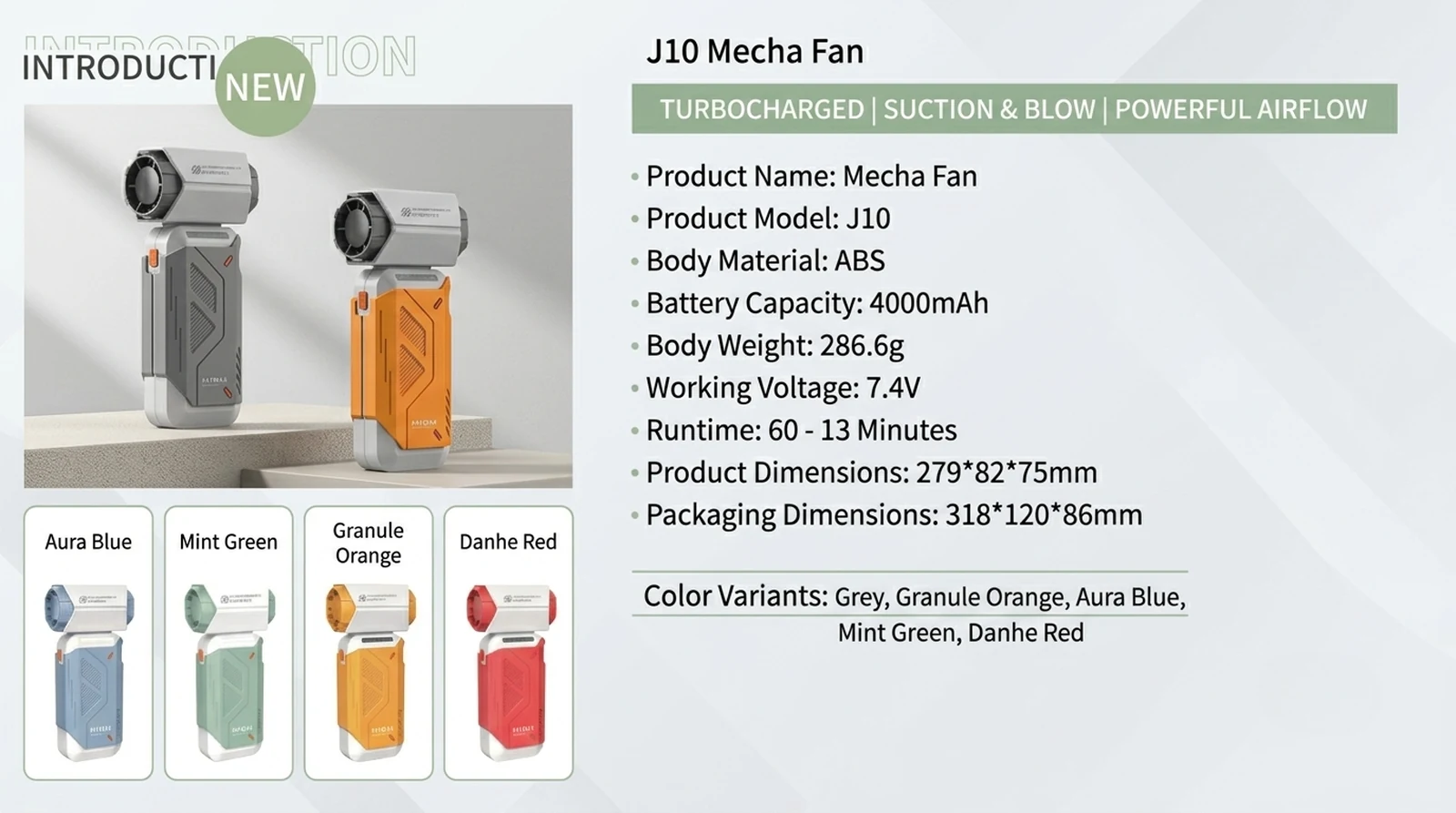
The portable fan and personal electronics category makes this especially visible. Products like the [J10 Mecha Fan](https://jlhy.cc/products/j10-mecha-fan/) combine mechanical housings, motorized components, battery management, and surface finishes — four different engineering conversations compressed into one SKU. Keeping each one intact across a 12-hour time gap requires more than fluent English. It requires structure.
This guide walks through the communication habits, documents, and follow-up routines that protect technical detail when you are working with an overseas factory. Nothing here is a silver bullet. Each habit is small. Together, they prevent the most common categories of sourcing failure.
Common Communication Pitfalls With Overseas Factories
1. Confusing Conversational Fluency With Engineering Clarity
The single biggest pitfall is assuming that a factory salesperson who speaks fluent English also understands your technical request. Fluency in conversation is not fluency in tolerance stacks, injection molding shrinkage, or Li-ion cell grading. A perfectly grammatical email can still be technically wrong.
Watch for responses that sound confident but re-state your requirement in vague terms. If you specified a wall thickness of 1.5 mm with a tolerance of ±0.1 mm, and the factory replies "we can do 1.5 mm thickness fine," that reply tells you nothing about how they interpreted the tolerance.
2. Letting Verbal Promises Replace Written Records
WeChat voice notes, phone calls, and live chat are convenient. They are also the single largest source of disputes later. A voice message in a busy workshop, recorded in a noisy environment, by a sales rep who is also juggling four other accounts — that voice message will not protect you when the production line ships a different finish than the one you discussed.
3. Mixing Aesthetic and Engineering Feedback
Buyers often describe a problem in product terms ("the vents look uneven") when the actual issue is mechanical ("the louver pivot has 2 mm of play"). Factory engineers respond well to mechanical language. They respond inconsistently to aesthetic-only descriptions because they cannot reproduce your eye.
4. Skipping the Reference Image
Words like "matte black" cover a wide spectrum. So do "smooth," "textured," "industrial," and "minimal." Without a reference photo, a Pantone code, or a finish sample, the factory will use whatever default sits closest in their library. That default will almost never match the one in your head.
5. Treating Time Zone Differences as a Convenience Issue
A 12-hour gap is not just an inconvenience. It is a structural delay on every question. If you send a question at 9 a.m. your time, the factory sees it at 9 p.m. their time. By the time their engineer reviews it the next morning, you have already started your day. A single round of clarification can cost 24 hours. Three rounds of clarification can cost a week. Plan around this.
Documents and Visuals That Bridge Language Gaps
Technical Drawings With Tolerances and Annotations
A 2D drawing with GD&T callouts, surface finish symbols, and material notes is the closest thing to a universal language in manufacturing. Even when the English annotations are imperfect, a drawing with numeric tolerances tells the engineer exactly what is and is not negotiable.
If you do not have a CAD team, invest in one drawing per critical component. The cost is trivial compared to the cost of a mis-manufactured housing or a battery compartment that does not close.
A Single Living Specification Sheet
Instead of scattering requirements across dozens of emails, maintain one spec sheet — usually a PDF or shared Google Doc — that holds every requirement in one place: dimensions, materials, finishes, electrical ratings, packaging, labeling, and compliance marks. Every factory email should reference this sheet by version number ("per spec sheet v3.2"). This single habit eliminates most version-control disputes.
Reference Photos for Color and Finish
For any finish, color, or surface texture, attach a reference photo taken in neutral lighting next to a Pantone or RAL swatch. For metallic finishes, attach two photos: one under daylight, one under office fluorescent light. Most color disputes come from the factory checking the sample under shop lighting while you are checking under retail lighting.
Short, Annotated Videos
A 30-second video of the product in use — annotated with arrows pointing to the exact feature you are describing — solves more ambiguity than a 500-word email. Most factories can play videos natively in WeChat or via shared cloud links.
Material and Component Lists With Datasheets
If you are specifying a particular cell, motor, fastener, or adhesive, attach the manufacturer's datasheet. Do not assume the factory can look up an equivalent on their own. Equivalents vary, and "we used a similar one" is the beginning of most quality disputes.
The Role of Written Records and Confirmation Emails
Why the Confirmation Email Exists
After every phone call or voice message, send a short confirmation email summarizing what was discussed and what was agreed. Keep it to one paragraph:
- What you asked
- What the factory committed to
- Any open items still under review
- The date and the people involved
This email does not need to be long. Its job is to create a written record both sides can reference when memories drift.
Version-Controlled Reply Threads
Whenever you update a drawing or spec sheet, send it again with a clear version label. Ask the factory to reply with the same version label in their acknowledgment. This creates a paper trail that ties each revision to a confirmed acceptance.
Pre-Production Sample Sign-Off
Before mass production begins, require a signed pre-production sample photo or a physical sample shipped to you. The sign-off should reference the spec sheet version and the drawing revision. Without this step, the factory has no documented confirmation that the sample matches your expectation — and you have no leverage if the bulk run differs.
Shipping and Inspection Documentation
The same principle applies after production. The factory should send pre-shipment inspection photos and, where appropriate, a third-party inspection report. Your purchase order should reference which documents are required before the goods leave the factory floor.

Handling Misunderstandings Before They Escalate
Pause Before Escalating
The first instinct when a factory does the wrong thing is to escalate. Resist that instinct on the first signal. Most cross-border misunderstandings start as a small drift — a finish slightly off, a tolerance slightly wide, a label slightly misaligned. Most of these can be corrected with a calm, specific, written note that includes a photo, the drawing reference, and the spec sheet version.
State the Problem, the Standard, and the Fix
When raising an issue, structure it in three sentences:
1. **The problem.** What you observed, with a photo.
2. **The standard.** The drawing or spec sheet reference that defines the correct outcome.
3. **The fix.** What you want the factory to do — rework, replace, or accept with concession.
This structure removes ambiguity and gives the factory engineer something concrete to action.
Know When to Walk Away
If the same misunderstanding repeats twice despite written confirmations, that is no longer a communication problem. That is a process problem inside the factory. At that point, the right move is not a third reminder. It is a conversation about whether this supplier is the right fit for the project.
Patience and Structured Follow-Ups
The Factory Does Not Owe You an Instant Reply
A common source of buyer frustration is expecting same-day responses. Even the best-run factories in China operate on a different rhythm: morning line review, midday customer calls, afternoon production, end-of-day reporting. A response within 24 business hours is normal. A response within 12 business hours is good. A response within 4 hours is exceptional.
Build your own schedule around this. Send your detailed questions in a single batch rather than dribbling them across the day. Each batched message reduces the total round-trip cost.
Use a Simple Tracker
A spreadsheet with four columns — date sent, topic, factory contact, status — sounds basic, but it is the difference between organized sourcing and chaotic sourcing. Once you are running more than two projects with a factory, the tracker is no longer optional.
Schedule Recurring Check-Ins
Weekly or bi-weekly video calls with a fixed agenda keep projects moving without flooding the factory with one-off questions. Send the agenda 24 hours in advance, and end every call with a written summary email. The discipline of a recurring structure is what turns a transactional relationship into a working partnership.
Where to Start: Direct Factory Communication
If you are evaluating a factory for the first time, the communication test begins before any order is placed. Send a technical question, observe the response time, the format of the answer, and the willingness to ask clarifying questions. A factory that engages carefully at the inquiry stage is far more likely to engage carefully during production.
Buyers sourcing portable fans and similar electromechanical products can begin a direct conversation with the engineering team at [jlhy.cc](https://jlhy.cc), where the J10 Mecha Fan is one example of the kind of detailed factory interaction that the right communication habits make possible.
Closing Thoughts
Factory communication is not about being fluent, persuasive, or demanding. It is about being structured. The buyers who consistently get clean production runs are not the ones who send the most emails. They are the ones who send the clearest documents, confirm every decision in writing, and treat every clarification as a chance to tighten the spec rather than assign blame.
Once that habit is in place, the time zone gap shrinks, the language gap shrinks, and the project moves at the speed your spec sheet allows — not the speed of your frustration.

FAQ
**What is the single most important document when communicating with a Chinese factory?**
A version-controlled specification sheet. It centralizes every requirement and gives both sides a single reference for every conversation. Every email should reference it by version number.
**Should I rely on WeChat voice messages for technical discussions?**
No. Voice messages are convenient for quick check-ins, but every technical decision should be confirmed in writing with a follow-up email summarizing what was agreed. Voice messages are too easy to mishear and too hard to reference later.
**How long should I wait for a reply from a Chinese factory?**
Plan on a 24 business-hour window for a detailed response. Anything faster is a bonus. Build your project schedule around this rhythm by batching questions into a single daily message rather than sending them piecemeal throughout the day.
Frequently Asked Questions
What is the single most important document when communicating with a Chinese factory?
A version-controlled specification sheet. It centralizes every requirement and gives both sides a single reference for every conversation. Every email should reference it by version number.
Should I rely on WeChat voice messages for technical discussions?
No. Voice messages are convenient for quick check-ins, but every technical decision should be confirmed in writing with a follow-up email summarizing what was agreed. Voice messages are too easy to mishear and too hard to reference later.
How long should I wait for a reply from a Chinese factory?
Plan on a 24 business-hour window for a detailed response. Anything faster is a bonus. Build your project schedule around this rhythm by batching questions into a single daily message rather than sending them piecemeal throughout the day.