Lead Time Planning for OEM and ODM Personal Care Appliance Projects
Lead time is the hidden cost driver in any OEM or ODM personal care appliance project. This guide walks sourcing managers through the realistic timeline, the variables that push it sideways, and the checkpoints that keep production on schedule.
Lead Time Planning for OEM and ODM Personal Care Appliance Projects
For procurement teams and brand owners, lead time is rarely a single number. It is the cumulative result of supplier evaluation, tooling, sampling, certification, mass production, and freight — each step carrying its own risk of slippage. In personal care appliances, where launch windows are tied tightly to retail calendars, gifting seasons, and weather-driven demand, a misjudged timeline can mean missing a quarter entirely.
This guide walks through the realistic OEM and ODM project timeline for personal care appliances, the factors that most often extend it, and the documentation milestones a buyer should anchor every stage to. The intent is operational: by the end, sourcing managers should have a checklist they can map onto any RFQ and any supplier — including reference process documentation published by established OEM factories such as JLHYP at jlhy.cc.
Why Lead Time Planning Matters in Personal Care Appliances

Personal care is a category with two structural pressures that other consumer electronics do not always share:
- **Seasonality is hard.** Hair dryers, beard trimmers, and portable fans all peak in narrow windows. A mecha-style portable fan, for example, concentrates demand in late spring and summer across most retail markets. Missing that window by a single shipping cycle can leave inventory stranded for a year.
- **Safety and EMC testing are non-skippable.** Even a simple mains-powered device typically requires country-specific electrical safety, EMC, and material compliance reviews. These tests sit on the critical path and cannot be parallelised away without regulatory risk.
A robust lead time plan does not try to eliminate these pressures; it absorbs them with buffer and contingency built into every stage.
The Typical OEM Project Timeline: Inquiry to Shipment
A clean OEM/ODM engagement for a personal care appliance usually runs through seven distinct phases. The durations below are typical ranges for a moderately customized product; an off-the-shelf ODM build with cosmetic changes can move faster, while a ground-up ODM with new tooling runs longer.
1. Inquiry and Feasibility Assessment
The buyer submits a brief — target markets, target retail price tier, feature list, regulatory scope, and forecast volume. The supplier responds with a feasibility note covering:
- Whether the requested spec can be met with existing platforms or requires fresh R&D
- Preliminary compliance flags (e.g., plug type, voltage, wattage constraints by destination market)
- Indicative MOQ tier and any tooling investment needed
- A high-level milestone calendar
This stage is fast — usually days rather than weeks — but it is where most downstream surprises are avoided or invited.
2. Quotation and Specification Freeze
Once feasibility is cleared, the supplier issues a formal quotation against a frozen specification document. The spec freeze is the single most important moment in the project: every later delay that traces back to "we changed our mind" almost always points to a spec that was not fully frozen here.
Buyers should expect to receive:
- A detailed BOM outline
- Tooling cost contribution (if applicable)
- Compliance plan with test lab identified
- Sample cost and lead time
- Mass production lead time estimate
- Payment terms and Incoterms proposal
3. Sample Development and Approval
Sample phase typically splits into three rounds for new products:
- **Engineering sample (ES):** validates internal architecture, motor selection, airflow or heating curve, and basic safety. Aesthetic finish is secondary.
- **Pre-production sample (PPS):** produced on the production tooling or near-production methods, with the final finish, color match, branding, and packaging. This is the sample the marketing team signs off on.
- **Golden sample:** the reference unit kept by both parties against which every mass-production unit is judged.
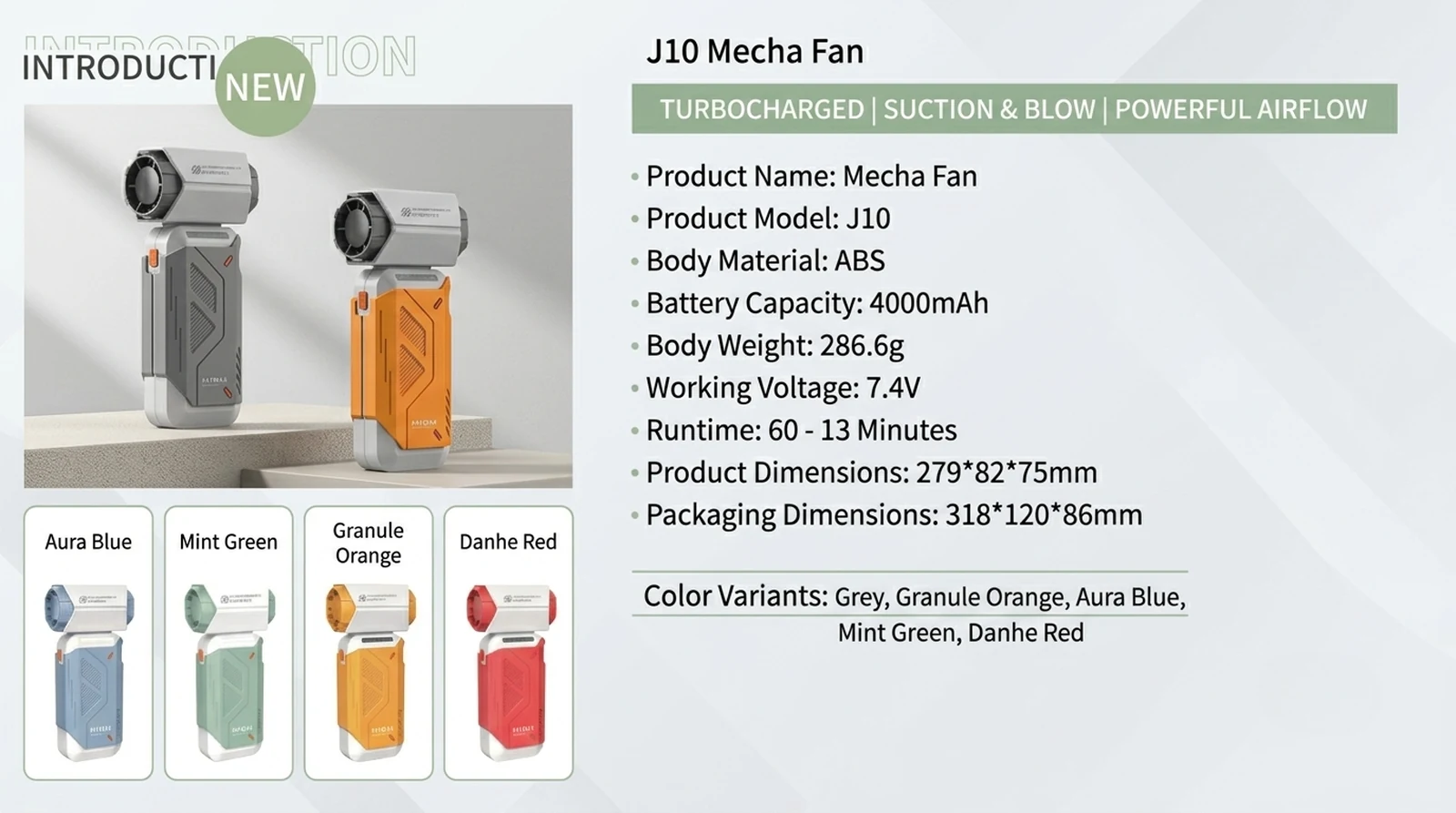
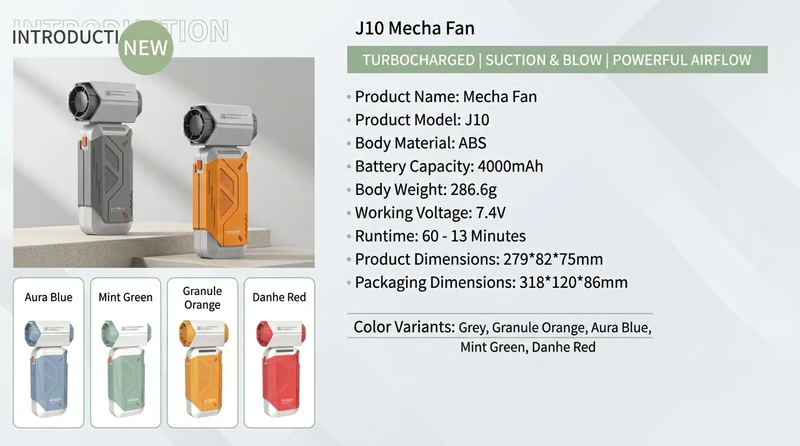
Allow realistic time here. Tooling for plastic enclosures, plus motor sourcing and PCB prototyping, will dominate the calendar. For reference, a project such as the J10 Mecha Fan, which combines a custom mecha-style shell with brushless motor integration, runs through this sample loop with engineered precision to lock down both the industrial aesthetic and the airflow performance curve before mass production tooling is committed.
4. Tooling and Mold Preparation
For new enclosures, this is often the longest single block on the timeline. Mold fabrication, T0 trials, T1 modifications, and final T2 sign-off can collectively absorb significant weeks depending on part complexity and surface finish requirements.
For an ODM build on an existing platform, tooling may be limited to cosmetic changes — color, decoration, branding — and the calendar compresses accordingly.
5. Pre-Production Sample and Sign-Off
Once tooling is finalized, the supplier runs a short pre-production batch (often a few dozen to a few hundred units) on the actual production line. This batch validates:
- Line setup and yield at production speed
- Inline QC procedures
- Final assembly ergonomics
- Real-world packaging line performance
The PPS sign-off authorizes mass production.
6. Mass Production and Inline QC
Mass production is the stage buyers see the least of, and that is by design. The supplier runs daily output with AQL-based inline inspections, batch testing, and traceability records. Buyers should expect:
- Weekly production reports with output vs. plan
- Inline photos or short video clips at agreed checkpoints
- First-article inspection reports for color, finish, and function
- Open issue log with resolution timing
A practical buyer habit is to lock a virtual or in-person midpoint inspection during production, not just at the end.
7. Final Inspection, Packing, and Shipment
The finished batch is held for pre-shipment inspection (PSI) against an agreed AQL standard. Once PSI is cleared, the goods are packed to the buyer's specification, containerized, and booked for outbound freight. Documentation at this stage includes the commercial invoice, packing list, certificates of origin, and any required compliance attestations.
Factors That Affect Lead Time
Even with a perfect plan, several variables can push a project right. Sourcing managers should size these honestly at the RFQ stage rather than discovering them mid-project.
- **Degree of customization.** A cosmetic change to an existing platform is materially faster than a fully new mechanical architecture. Motor, PCB, and battery selections each add their own sourcing lead.
- **Material availability.** Specialty plastics, brushed metal finishes, and branded packaging components often sit on supplier-specific lead times that the OEM cannot compress.
- **Compliance and certification scope.** Multi-market launches that bundle UL, CE, FCC, UKCA, and other marks extend the testing window. Each market test is typically sequential unless the test lab parallelises them.
- **Production capacity and load.** Factories running near capacity during peak season will quote longer mass-production slots. Placing the order earlier in the off-season can shorten the back end materially.
- **Logistics mode.** Air freight closes the calendar faster but at a different cost basis than sea. Buffer planning must account for which mode the buyer has committed to.
- **Buyer-side response time.** Approval cycles for artwork, copy, and marketing collateral often become the binding constraint once engineering is unblocked.
Aligning Project Timing with Seasonal Demand
Seasonal alignment is where lead time planning earns its keep. The principle is simple: work backward from the retail on-shelf date.
For a summer-positioned portable fan, the on-shelf target for a major market might fall in May. Working back through inbound logistics, customs clearance, and distribution center handling, the goods need to land roughly a month earlier. Production and PSI take a defined block. Pre-production sampling, tooling, and approval take longer. The kickoff meeting and spec freeze need to happen months earlier still.
The same logic applies in reverse for winter-positioned personal care devices such as heated hair tools, where Q4 retail placement needs Q3 production and Q2 supplier commitment.
A practical exercise for any project is to draw the season curve — forecast demand by month — and overlay the cumulative supplier lead time. Where the two lines cross, that is the latest acceptable PO date. Any slip past that point is a season miss.

What Buyers Can Do to Keep Projects on Schedule
Most delays in OEM projects are not engineering problems. They are process problems that the buyer's habits either create or prevent.
- **Freeze the spec before tooling starts.** Every change after tooling carries a time penalty. Color changes, port relocations, branding swaps — each one resets a downstream clock.
- **Respond inside the supplier's quoted sample window.** A four-day decision is dramatically different from a fourteen-day decision when those delays compound across three sample rounds.
- **Stage artwork and packaging assets early.** Many buyers treat artwork as a final-mile item, but artwork is on the critical path from PPS onward.
- **Use the golden sample as the contract.** Once a golden sample is signed off, every later dispute resolves against it. This is one of the cheapest risk-reduction tools in OEM.
- **Build a buffer into the calendar.** A two-week buffer at final inspection, even with a reliable supplier, absorbs port congestion, holiday closures, and QC rework.
- **Keep payment terms clean.** Staged payment on agreed milestones — industry-standard deposit and balance structure — keeps the supplier's cash flow healthy and removes friction that otherwise surfaces as production deprioritisation.
- **Maintain a single decision-maker on the buyer side.** Multiple approvers multiply cycle time even when each individual is fast.
Documentation Milestones Throughout the Lead Time
Documentation is the spine of an OEM project. A buyer who tracks the right documents at the right checkpoints catches most issues before they become schedule problems.
| Stage | Key document | Buyer checkpoint |
|---|---|---|
| Inquiry | Feasibility note | Confirm regulatory scope |
| Quotation | Frozen spec sheet | Cross-check every line item |
| Sampling | Sample approval form | Sign against the golden sample |
| Tooling | T1/T2 trial reports | Inspect dimensional and cosmetic fit |
| Pre-production | PPS report | Validate finish, color, and packaging |
| Mass production | Weekly production report | Track output vs. plan |
| Pre-shipment | PSI report and AQL record | Sign before container release |
| Shipment | Commercial documents | Reconcile to PO and QC record |
A buyer who insists on each of these documents at its milestone will rarely be surprised at the end.
External Resources and Reference Reading
For buyers building an OEM process from scratch, it is worth reviewing an established supplier's published process timeline. Factories with mature OEM operations tend to publish clear milestone breakdowns that reflect years of refinement. The OEM process documentation available at jlhy.cc is one example, mapping the standard inquiry-to-shipment flow for personal care and small appliance categories. Reading it alongside a target supplier's quote gives a quick reality check on whether the calendar being proposed is conservative or aggressive.
For a worked example of how a customized ODM appliance navigates these stages — from brief through tooling, sampling, and mass production — the J10 Mecha Fan product page at https://jlhy.cc/products/j10-mecha-fan/ shows how a custom-shell, brushless-motor fan moves through the same milestones described above.
Final Thoughts
Lead time planning is less about a single calendar number and more about disciplined sequencing. The buyers who consistently hit their launch windows tend to do the same things: freeze specs early, treat the golden sample as a contract, track a small set of documents at named milestones, and build buffer into the back half of the timeline. Suppliers will flex to that discipline. The market, however, will not.
---

FAQ
**What is a realistic OEM lead time for a personal care appliance?**
For a moderately customized ODM build on an existing platform, the typical end-to-end timeline runs from several weeks to a few months from PO to ex-factory goods, depending on tooling scope and certification requirements. A ground-up ODM with new tooling and multi-market compliance usually runs considerably longer. Quoted timelines should always be cross-checked against the buyer's seasonal on-shelf date.
**Which stage of the OEM process most often causes delays?**
In practice, sample approval and artwork sign-off on the buyer side are the most common sources of slippage, followed by certification testing windows for multi-market launches. Tooling overruns are less common with experienced suppliers but are the largest single block of time when they occur.
**How should buyers align OEM lead time with seasonal demand?**
Work backward from the planned retail on-shelf date through distribution handling, inbound freight, customs clearance, production, pre-production sampling, and tooling. Mark the latest acceptable PO date and treat any slippage past that point as a season-miss rather than a delay to recover from.
**How can a buyer verify that mass production is on track before final inspection?**
A midpoint inspection during production — either virtual via live video walkthrough or in-person — combined with weekly production reports and an open issue log, gives the buyer early visibility. Waiting until PSI to discover a process drift is the most expensive way to find out.
Frequently Asked Questions
What is a realistic OEM lead time for a personal care appliance?
For a moderately customized ODM build on an existing platform, the typical end-to-end timeline runs from several weeks to a few months from PO to ex-factory goods, depending on tooling scope and certification requirements. A ground-up ODM with new tooling and multi-market compliance usually runs considerably longer. Quoted timelines should always be cross-checked against the buyer's seasonal on-shelf date.
Which stage of the OEM process most often causes delays?
In practice, sample approval and artwork sign-off on the buyer side are the most common sources of slippage, followed by certification testing windows for multi-market launches. Tooling overruns are less common with experienced suppliers but represent the largest single block of time when they occur.
How should buyers align OEM lead time with seasonal demand?
Work backward from the planned retail on-shelf date through distribution handling, inbound freight, customs clearance, production, pre-production sampling, and tooling. Mark the latest acceptable PO date and treat any slippage past that point as a season-miss rather than a delay to recover from.
How can a buyer verify that mass production is on track before final inspection?
A midpoint inspection during production — either virtual via live video walkthrough or in-person — combined with weekly production reports and an open issue log, gives the buyer early visibility. Waiting until PSI to discover a process drift is the most expensive way to find out.