OEM and ODM Explained for Personal Care Appliance Buyers
Sourcing a personal care appliance under your own brand involves two very different manufacturing routes. This guide breaks down OEM versus ODM, the project stages that follow, and the documentation that keeps development on schedule.
Why the OEM vs. ODM Question Matters in Personal Care

When a brand, retailer, or distributor decides to launch a personal care appliance under its own label, the very first strategic question is rarely about colors or features. It is about who actually designs the product. The answer shapes tooling investment, lead time, intellectual property, and ultimately how much creative control the buyer retains once the device reaches the warehouse.
Two acronyms dominate this conversation: **OEM** (Original Equipment Manufacturer) and **ODM** (Original Design Manufacturer). The labels are often used interchangeably in marketing decks, but in a sourcing office they describe very different working arrangements. Choosing the wrong one is one of the most common — and most expensive — mistakes a first-time buyer can make.
This guide walks through what OEM and ODM really mean in practice for fans, hair tools, handheld massagers, shavers, and similar small appliances, and explains how to plan a development cycle that does not stall in the sample room.
OEM and ODM in Practical Sourcing Terms
What an OEM relationship actually looks like
In an OEM arrangement, the factory manufactures a product that the buyer has specified in detail. The buyer's team (or a contracted design house) provides the industrial design, mechanical drawings, electronic schematics, bill of materials, packaging artwork, and regulatory positioning. The factory's job is to translate that package into a producible, repeatable, quality-consistent run.
For the buyer, OEM means:
- Full ownership of the industrial design and the engineering data.
- Higher upfront investment in tooling, mold fabrication, and prototyping.
- A longer calendar from concept to mass production, because every detail is being built from the ground up.
- Stronger defensibility if the product is patented or features a unique mechanism.
OEM is the natural choice for brands with an in-house product team, a clear mechanical brief, and a desire to own a distinct device rather than a relabeled commodity.
What an ODM relationship actually looks like
In an ODM arrangement, the factory already has a finished or near-finished design. The buyer selects an existing platform and adapts it: outer color, surface finish, branding artwork, accessory kit, packaging language, and sometimes firmware presets. The factory's R&D team has already absorbed the engineering risk and amortized tooling across earlier customers.
For the buyer, ODM means:
- Faster time to market, because the mechanical and electronic platform is mature.
- Lower upfront tooling spend, since molds and assembly fixtures often already exist.
- Shared intellectual property, with the factory retaining rights to the underlying design.
- Customization limited to the surfaces, cosmetics, and configuration the factory has agreed to expose.
ODM is well-suited to private-label distributors, regional brands entering a new category, and teams that want a competitive device on shelf quickly without building an engineering department.
Why the distinction blurs in real projects
Most factories active in personal care sit on a spectrum rather than in two neat boxes. A supplier may offer a stock ODM chassis but invite the buyer to alter the impeller geometry, swap the motor supplier, or redesign the handle. This "ODM-plus" or "semi-OEM" middle ground is common, and it is where most purchasing managers end up negotiating.
The trick is to put the customization level in writing before tooling begins. A buyer who assumes a deep mechanical redesign is part of an ODM quote — when the factory actually intends only a color and logo change — will discover the gap when the first sample arrives.
When to Choose Private Label Adaptation vs. Custom Development
Choose private label (ODM) when:
- The target retail window is short and the category is competitive.
- The product category (a basic desk fan, a simple trimmer, a standard hair dryer) does not require a unique mechanism to compete.
- The buyer lacks in-house mechanical or electronic engineers.
- The forecast is conservative and does not justify bespoke tooling.
- Compliance documentation can be inherited from the factory's existing portfolio.
Choose custom development (OEM) when:
- The product carries a feature or mechanism the buyer wants to protect or patent.
- The device must integrate with a proprietary app, accessory ecosystem, or charging standard.
- The unit must hit a specific acoustic, airflow, weight, or ergonomic target that stock platforms cannot meet.
- The brand's positioning depends on visible design language — color, materials, finish, form factor.
- The order volume and lifecycle are large enough to amortize the engineering spend.
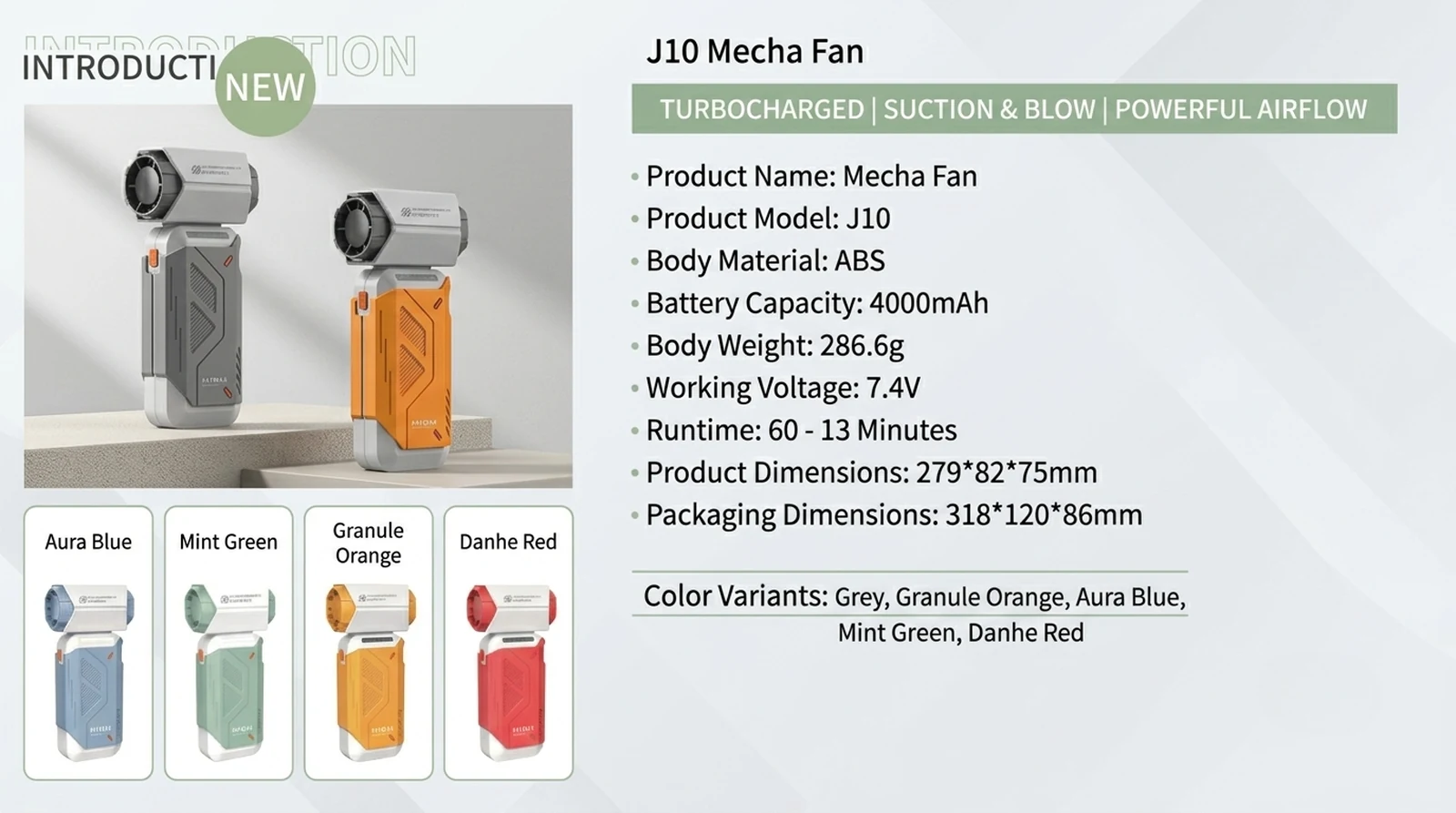
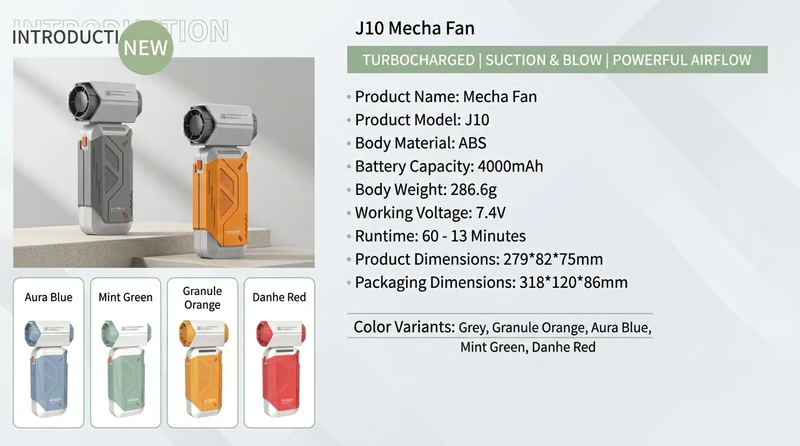
A practical example: a buyer sourcing a portable mecha-style desk fan could shortlist a stock ODM chassis for a quick regional launch, while reserving a fully custom OEM project for a flagship colorway or a feature variant. The J10 Mecha Fan, available through [jlhy.cc's product catalog](https://jlhy.cc/products/j10-mecha-fan/), illustrates the kind of platform where a buyer can evaluate cosmetic adaptation versus deeper mechanical change during sample review.
Typical Project Stages from Concept to Production Handover
Even when the underlying relationship is ODM, the buyer-facing process follows a recognizable sequence. Custom OEM projects extend each stage, but the gates are similar.
1. Brief and feasibility review
The buyer submits a written brief: category, target user, must-have features, aesthetic references, target markets, regulatory scope, expected volume, and target launch quarter. The factory responds with a feasibility note flagging electrical constraints, tooling lead times, and any features that conflict with existing certifications.
2. Concept alignment and platform selection
For ODM, the factory presents candidate platforms with photos, drawings, and a list of customizable surfaces. For OEM, the buyer's industrial designer presents concepts that the factory reviews for manufacturability.
3. Specification lock-in
A formal specification document is issued. It covers electrical ratings, motor type, battery chemistry and capacity, materials, color references (typically Pantone or RAL), accessory list, packaging dimensions, and labeling. This document becomes the reference for every later approval.
4. Prototyping and engineering samples
The factory produces engineering samples (often labeled ES-1, ES-2, ES-3). Each round addresses open issues from the previous one. A typical fan or small appliance passes through two to four sample rounds before a golden sample is approved.
5. Pre-production samples and pilot run
Once the engineering sample is approved, the factory cuts a pre-production run on the actual production line. Pre-production samples (PPS) confirm that the assembly line, not a bench setup, can build the device consistently.
6. Compliance and certification testing
Samples are submitted to accredited labs for the target markets: CE-EMC, CE-LVD, FCC, UKCA, RoHS, REACH, and category-specific standards. For battery-powered devices, UN 38.3 transport testing is added.
7. Mass production and inline quality control
After a successful pilot run and a passed compliance report, mass production begins. Inline inspections, IPQC checks, and a final pre-shipment inspection (PSI) gate the release of finished goods.
8. Handover and after-sales support
The factory delivers the agreed documentation pack: test reports, bills of materials, artwork files, and warranty terms. Spare parts availability and after-sales service scope are confirmed in writing before the PO closes.

Samples, Specifications, and Approval Documents
A disciplined document trail is the difference between a project that ships on time and one that drifts for months.
Samples
- **Engineering samples (ES):** bench-built, used for design verification. Not representative of mass-production finish.
- **Pre-production samples (PPS):** built on the production line with production tooling. The benchmark for sign-off.
- **Golden sample:** a single reference unit, signed and stored, against which mass-produced units are compared.
Buyers should keep one golden sample on file for the entire product lifecycle. Disputes about "what was approved" are far easier to settle when a sealed reference unit is on the shelf.
Specifications
The specification sheet should be a controlled document with version numbers and dates. Every change after sign-off should trigger a formal revision request, ideally countersigned by both parties. Specification drift — where small changes accumulate without a clean record — is one of the most common causes of approval delays.
Approval documents
A typical approval pack includes:
- Signed golden sample photo record
- Approved artwork proof with Pantone references
- Compliance test reports (per destination market)
- Material declarations (RoHS, REACH where applicable)
- Packing list and master carton specification
- User manual and warranty card in target languages
Buyers should request these documents in editable formats where possible, so future product revisions can be managed without re-keying data.
Common Misunderstandings That Slow Down Development
"OEM and ODM are basically the same"
They are not. Conflating the two leads to mismatched expectations, especially around tooling cost, IP ownership, and the level of design change the factory will absorb before charging extra.
"A sample is a sample"
Treating every sample as equivalent skips the engineering-to-production transition. Approval should always reference a PPS unit, not a hand-built prototype.
"The factory will tell us what we need to certify"
The factory should advise, but regulatory responsibility for the destination market ultimately sits with the brand owner or importer. Buyers should engage a local compliance consultant for first-time category entries.
"Tooling is owned by the factory"
Tooling ownership is a negotiation point. Buyers paying for bespoke tooling should secure a written tooling ownership clause, including a storage and maintenance commitment and a release trigger if the relationship ends.
"Color approval can happen on a screen"
Color decisions made from monitor images routinely fail at the production line. Physical color proofs, evaluated under controlled lighting against a Pantone or RAL fan deck, are the only reliable reference.
"Lead times start when the PO is signed"
Lead times typically start after the specification, artwork, and golden sample are all approved. Signing a purchase order with open approvals invites slippage.
Pointing Readers to a Reference Process
For buyers who want to see how a working OEM and ODM pipeline is structured in practice, the resource library at [jlhy.cc](https://jlhy.cc/products/j10-mecha-fan/) walks through the typical sequence — from concept review and specification lock-in through pilot run, certification, and mass production — for portable fans and similar small appliances. Reviewing a published process map before issuing a brief helps buyers frame their own requests and reduces back-and-forth during the feasibility stage.

FAQ
What is the practical difference between OEM and ODM for a personal care appliance?
OEM means the buyer supplies the design and the factory manufactures it. ODM means the factory supplies an existing design and the buyer adapts it. OEM gives more control and IP ownership but costs more and takes longer. ODM is faster and cheaper but limits customization.
How much customization is realistic in an ODM project?
Cosmetic changes — color, finish, branding, packaging, accessory kit, and sometimes firmware presets — are standard. Mechanical changes — impeller geometry, motor selection, housing structure — depend on the factory's willingness to share tooling and engineering capacity. Deep mechanical change usually converts the project into a semi-OEM engagement with a separate engineering quote.
What should a buyer prepare before approaching an OEM or ODM factory?
A written brief covering category, target user, must-have features, target markets, expected volume, regulatory scope, and launch quarter. Pantone references, reference imagery, and any mechanical drawings should be attached. The more complete the brief, the more accurate the feasibility response and the lower the risk of mid-project scope changes.
Frequently Asked Questions
What is the practical difference between OEM and ODM for a personal care appliance?
OEM means the buyer supplies the design and the factory manufactures it. ODM means the factory supplies an existing design and the buyer adapts it. OEM gives more control and IP ownership but costs more and takes longer. ODM is faster and cheaper but limits customization.
How much customization is realistic in an ODM project?
Cosmetic changes such as color, finish, branding, packaging, accessory kit, and firmware presets are standard. Mechanical changes depend on the factory's willingness to share tooling and engineering capacity, and usually convert the project into a semi-OEM engagement with a separate engineering quote.
What should a buyer prepare before approaching an OEM or ODM factory?
A written brief covering category, target user, must-have features, target markets, expected volume, regulatory scope, and launch quarter. Pantone references, reference imagery, and any mechanical drawings should be attached. A complete brief produces a more accurate feasibility response and lowers the risk of mid-project scope changes.