How to Prepare an Inquiry for a China OEM Appliance Factory
Sourcing from a China OEM appliance factory starts long before samples arrive. This guide walks through how to prepare an inquiry that earns fast, accurate, and useful replies.
Why the Inquiry Itself Is Your First Quality Control Check

When a buyer reaches out to a China OEM appliance factory for the first time, the conversation usually begins with a single document: the inquiry email. Most newcomers underestimate how much weight this first message carries. In practice, the inquiry sets the tone for quoting, sampling, tooling decisions, and the entire back-and-forth that follows. A vague inquiry produces vague replies. A precise inquiry produces the kind of response a sourcing team can actually build a project around.
This guide walks through how to prepare an inquiry that respects the supplier's time, surfaces the information they need to quote accurately, and positions you as a serious buyer. The same principles apply whether you are sourcing a portable fan, a cordless hair tool, a small kitchen appliance, or an industrial accessory. The product category changes; the discipline of inquiry writing does not.
What Every Inquiry Should Include
A complete inquiry is not a long inquiry. It is a tightly structured one. Before you begin drafting, think about the minimum information a factory's sales or project engineer needs to send back a useful answer. The list below is the working baseline we recommend to any first-time buyer approaching a China OEM appliance factory.
1. A clear product description
State what you want to make in plain language. "Cordless handheld fan with brushless motor, USB-C rechargeable, target weight under 250 grams" is far more useful than "a portable fan like Brand X." A clear product description also helps the supplier route your inquiry to the right engineering team.
2. Target specifications
Include the specs that actually matter for quoting: voltage, battery type and capacity (if applicable), wattage, RPM range, decibel target, materials (ABS, aluminum, silicone), IP rating, dimensions, weight, color, finishing, and any accessory list. If a spec is flexible, say so. If a spec is non-negotiable, say that too.
3. Intended market and compliance territory
Tell the factory where the product will be sold. A unit destined for the EU, North America, the UK, the Gulf, Japan, Korea, or Australia may require different plug types, labeling, language, and certification pathways. Stating the destination market up front prevents weeks of rework later.
4. Order volume and rollout plan
Share your expected first-order quantity, your annual forecast range, and your launch timeline. If you are running a phased rollout with a pilot run followed by a full production run, mention both. Order volume affects which production line the factory will schedule, which sub-suppliers they will engage, and how aggressively they will negotiate tooling costs.
5. Customization scope
Specify whether you need OEM, ODM, or OBM support. OEM usually means "use your design and tooling, put our brand on it." ODM means "use or adapt an existing platform from the factory, with our branding and minor changes." OBM means "use the factory's existing product as is." Be explicit about which path you want.
6. Packaging requirements
Mention retail box vs. plain brown box vs. gift packaging. If you have a die-line, packaging mockup, or reference packaging style, attach it. If packaging is open, state that you are open to the factory's standard export packaging for a first quote.
7. Target sample date and target mass-production date
These two dates drive the entire project schedule. Even rough estimates help the factory assess feasibility. A buyer who says "I need samples by mid-Q2 and full production before the holiday window" is far easier to plan for than one who simply asks, "How fast can you do this?"
The Role of Target Specs and Target Markets
Specs and target markets are not separate inputs. They are two sides of the same conversation, and they shape each other in ways that buyers sometimes miss.
A spec list without a target market is incomplete. A factory quoting a portable fan for North America needs to know whether the buyer expects FCC compliance, Energy Star reporting, California Prop 65 documentation, and a NEMA 1-15 plug. A factory quoting the same form factor for the EU needs to know about CE marking, the applicable low-voltage directive alignment, RoHS material declarations, and a Europlug or Type-C connector. The same physical product, sold into different regulatory environments, requires different components, different testing, and different documentation.
Conversely, a target market without a spec list is a request for the factory to guess. Most reputable factories will decline to guess, or will quote a wide range that reflects the worst-case component choices. If you want a sharp, useful response, give the supplier both pieces of information together.
Where target specs matter most
- **Electrical and battery parameters.** Voltage, wattage, capacity, charge time, cycle life, and cell chemistry drive the bill of materials. Small changes here can shift the entire sourcing plan.
- **Acoustic or performance thresholds.** For fans, vacuums, hair tools, and other motor-driven appliances, decibel targets and airflow or suction targets often dictate motor selection.
- **Material and finish expectations.** A matte soft-touch surface requires different tooling and post-processing than a high-gloss spray finish. Saying "matte, similar to a consumer-electronics reference" is not enough; attaching a sample photo or a Pantone reference helps.
- **Drop, vibration, and IP requirements.** A fan intended for outdoor leisure markets has different durability requirements than one designed for desktop indoor use.
Where target market matters most
- **Plug and cordset selection.**
- **Labeling and user manual language requirements.**
- **Certification pathway and documentation deliverable list.**
- **Packaging recyclability and EPR registration expectations, especially for the EU.**
- **Retailer-specific compliance, if the buyer supplies into major chains.**
How to Attach Relevant Reference Materials
A well-prepared inquiry usually arrives with attachments. The right attachments accelerate quoting; the wrong ones create confusion. Here is how to use them well.
Sketches, drawings, and 3D files
If you have industrial design work underway, attach a neutral export of the relevant files. PDF drawings, neutral STEP or IGES files, and reference renderings are all useful. If your industrial design is still early, attach hand sketches with dimensions rather than waiting for polished CAD. A factory's engineering team can work with rough inputs as long as they understand your intent.
Reference products
A photo or two of a reference product is helpful, but always pair the photo with a written explanation of what you want to copy and what you want to change. "Use this for size reference only," "copy the grille geometry, but use a different color," and "achieve a similar hand-feel, but in a different material" are all clear instructions. "Make it like this" with no context is not.
Packaging references
If you have a target retail packaging style, attach a flat mockup or sample photos. If you have a die-line ready for production, attach it as a separate PDF. If you have nothing yet, say so. The factory can quote standard export packaging first and revise once your design team is further along.
Compliance and testing documentation
If you already have a compliance brief, a testing matrix, or a third-party lab report for a similar product, attach it. It tells the factory what testing infrastructure they need to align with.
How to keep attachments manageable
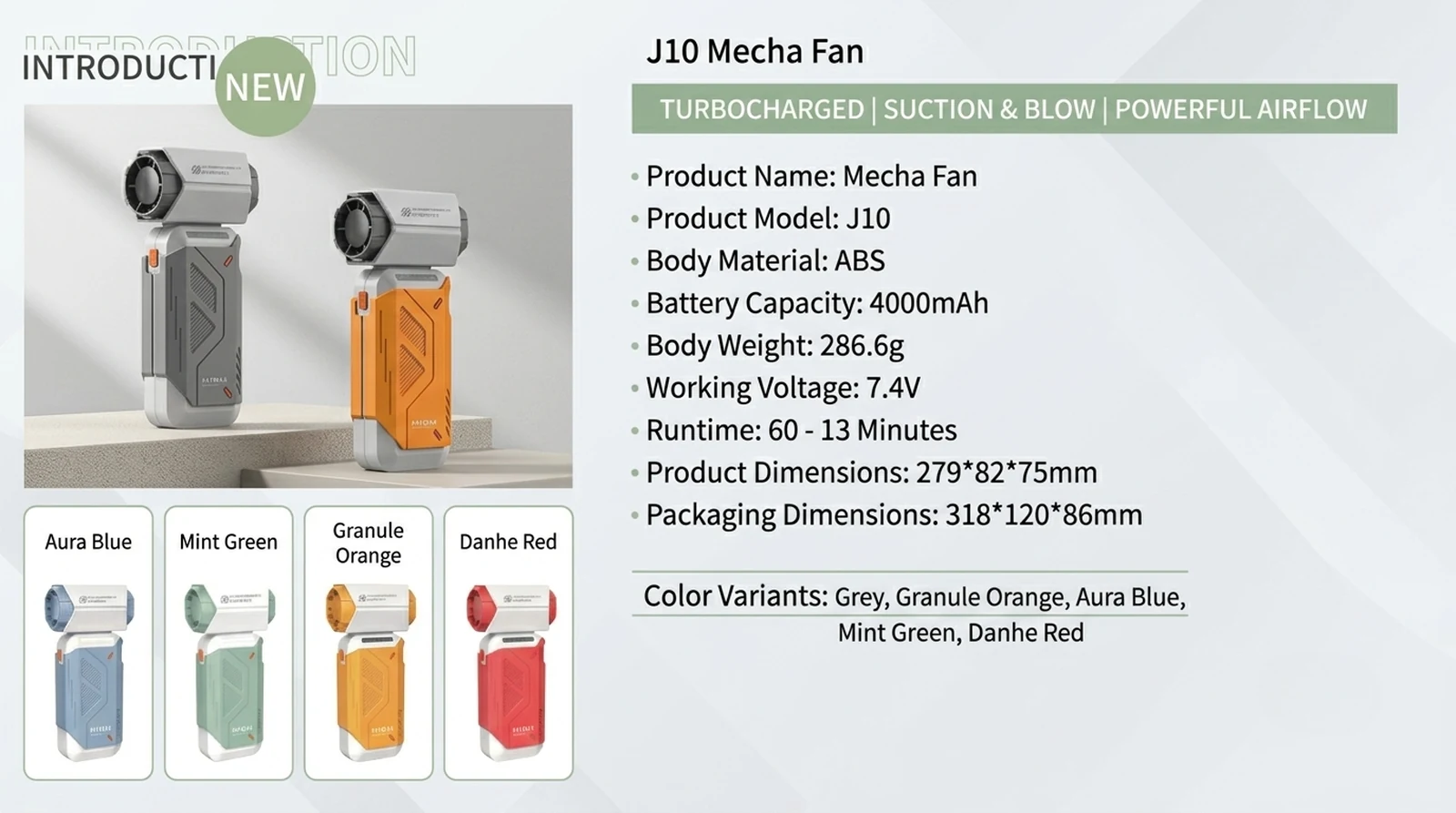
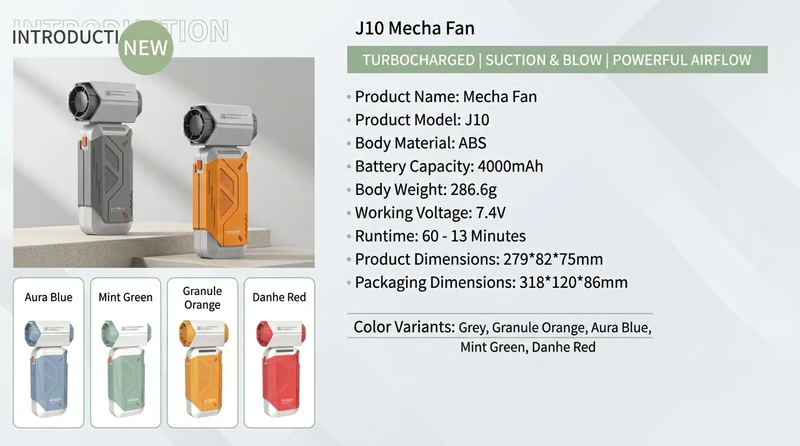
Most factories prefer a small number of well-labeled PDFs over a folder of mixed-format images. Use clear filenames such as `J10_Fan_Concept_v2.pdf` or `Packaging_Dieline_RevA.pdf`. If your inquiry is about the J10 Mecha Fan (see [the J10 Mecha Fan product page](https://jlhy.cc/products/j10-mecha-fan/)), label attachments accordingly so the supplier can match them to the right project thread.

How to Structure Questions for Clear Replies
The way you ask questions influences the answers you receive. Vague questions produce long, hedged answers. Specific questions produce specific answers. This section covers how to write inquiry questions that the supplier can actually answer on the first pass.
Use closed questions for known parameters
When you already know the answer you want, ask a closed question. "Can you support a 5000 mAh lithium cell with USB-C input?" is easier to answer than "What kind of battery setup would you suggest?" Closed questions reduce back-and-forth.
Use open questions only for areas where you genuinely need guidance
If you are unsure about a material choice, a finishing process, or a packaging format, ask an open question. "What finishing options would you recommend for a soft-touch, scratch-resistant surface in this price tier?" invites the supplier's expertise.
Number your questions
A numbered list of questions makes the reply easier to follow and easier to verify. After the supplier responds, you can refer back to question 4 or question 7 without ambiguity.
Separate project questions from commercial questions
Engineering questions and commercial questions often go to different people inside a factory. Label them clearly so the supplier can route them correctly.
Specify the format of the answer you want
If you want a side-by-side comparison, ask for a comparison table. If you want a milestone schedule, ask for a milestone list with dates. If you want a risk register, ask for one. The clearer your request, the less guesswork the supplier has to do.
The Value of a Concise, Organized Inquiry
A long inquiry is not the same as a thorough one. Most factory-side commercial managers read dozens of inquiries per week. The ones that earn fast, complete replies share a few traits.
Single thread, single subject
Send one inquiry per project. If you are evaluating three form factors, send three inquiries, not one combined email. Mixing projects dilutes the response.
Plain structure
Use headers, bullets, and short paragraphs. Avoid decorative fonts, embedded images in the body of the email, and long narrative paragraphs that bury the key information.
Upfront summary
The first two or three lines of your inquiry should answer three questions: what you want, in what quantity, by when. Everything else supports those three points.
Defined next step
Close your inquiry with a defined next step. "Please reply with a feasibility note and an indicative timeline by Friday" is better than "Looking forward to hearing from you." Defined next steps reduce the chance that your inquiry sits in a queue.
A reusable inquiry template
Most experienced buyers develop a template they reuse for every new project. This is good practice. A template ensures that every inquiry contains the same baseline information, which makes side-by-side comparison of supplier replies much easier.
Submitting the Inquiry
When the inquiry is ready, send it through the supplier's preferred channel. Many OEM factories now centralize incoming project requests through a contact form, which routes the inquiry to the right commercial or engineering contact. If you are evaluating a portable-mecha-fan-focused OEM partner, the contact portal at [jlhy.cc/contact](https://jlhy.cc/contact) is the right place to start a project thread.
Expect a first reply within one to three business days for most active suppliers. If the reply is incomplete, follow up once with the missing items numbered, then wait. A second unanswered inquiry within the same week rarely helps.

Frequently Asked Questions
How long should an inquiry email be?
Long enough to cover all seven baseline elements described above, and short enough to read in under two minutes. For most first projects, that means roughly 400 to 800 words plus attachments. If your inquiry runs longer, attach a project brief as a PDF and keep the body of the email as a summary.
Should I send the same inquiry to multiple factories at once?
Yes. Sending the same inquiry to several qualified factories is standard practice and lets you compare replies on a like-for-like basis. Use the same numbered questions and the same attachment labels so that responses can be compared directly.
What if I do not yet have finalized specifications?
Send what you have and clearly mark which parameters are open. Indicate your target range and your non-negotiable constraints. A supplier can quote against a defined range; they cannot quote against pure uncertainty. As your design matures, send a revised inquiry with version control so the supplier knows which brief is current.
Frequently Asked Questions
What is the single most important thing to include in a first inquiry to a China OEM factory?
A clear product description combined with the intended market. Without these two pieces, the factory cannot route your inquiry correctly or quote meaningfully.
How should I attach reference materials without overwhelming the supplier?
Use a small number of clearly labeled PDF files, separate engineering references from packaging references, and keep filenames descriptive and project-specific.
What is the best way to compare replies from multiple OEM factories?
Send the same structured inquiry with the same numbered questions and the same attachment labels to each factory. Consistent inputs produce comparable outputs.