Quality Control Terms Every New Importer Should Understand
QC language can look opaque until you translate it. This guide walks new importers through the inspection vocabulary that actually drives outcomes on OEM orders, from AQL sampling to pre-shipment and during-production checks, and shows how to document defects so suppliers act on them.
Why QC Vocabulary Matters Before You Place Your First OEM Order

Most new importers underestimate how much of a quality control program lives inside its vocabulary. The terms an inspector uses on the production floor, in a digital QC report, or in a corrective-action email are not interchangeable jargon. They map to specific sampling logic, decision rules, and accountability points. When you and your supplier are working from the same glossary, you remove ambiguity, shorten the feedback loop, and protect both the launch date and the brand you are building.
The reverse is also true. A buyer who nods along to terms like *AQL*, *critical defect*, or *DUPRO* without understanding the mechanics behind them will sign off on a shipment that should have been held. This guide walks through the QC terms you will encounter in nearly every OEM project for portable mecha fans, humidifiers, desk fans, and adjacent small-appliance categories, and explains the role each one plays in keeping production clean.
The Core QC Vocabulary You Will See in Every Report
Before discussing specific inspection types, it helps to anchor on the foundational terms. These appear in almost every QC report a buyer will receive, regardless of factory or product.
Defect Severity Levels
- **Critical defect (Cr):** A defect that poses a safety, regulatory, or functional hazard. Examples include exposed wiring, a missing safety fuse, sharp edges, or a battery cell that fails UN 38.3. Critical defects are typically governed by a *zero-acceptance* policy, meaning even a single finding can fail an entire inspection lot.
- **Major defect (Ma):** A defect that reduces usability, sellability, or function but does not create a safety hazard. A dented housing, a non-functioning LED indicator, or a missing accessory in the box would all qualify as major.
- **Minor defect (Mi):** A defect that does not affect use or sale but falls short of the approved sample or specification. Minor scuffs, slight color variation within an approved tolerance, or small labeling imperfections are typical examples.
Sampling and Acceptance
- **AQL (Acceptable Quality Level):** The statistically defined maximum percentage of defective units considered tolerable in a sample. The two standards you will see most often are **AQL 1.0** for major defects and **AQL 2.5** for minor defects, with **AQL 0** reserved for critical defects. AQL tables (most commonly ISO 2859-1 / ANSI Z1.4) tell the inspector how many units to pull from a lot and how many defects are allowed before the lot is rejected.
- **Sampling plan:** The combination of lot size, sample size, and acceptance/rejection numbers that the inspector follows during a check. Always confirm the sampling plan in writing before the inspection is conducted.
- **Lot size:** The total number of units in the batch being inspected. The lot size determines the sample size under the AQL table.
Inspection Outcome
- **Pass / Conformance:** The lot meets the agreed AQL and product specification. Goods can be released for shipment or next-stage packing.
- **Fail / Rejection:** The lot exceeds the agreed defect limits or contains any critical defect. The factory should rework, sort, or produce a replacement lot before re-inspection.
- **Pending / Hold:** The inspector needs clarification, additional information, or a re-test before issuing a final disposition.
How AQL Inspections Actually Work
AQL is the single most misunderstood term among first-time importers. New buyers often treat AQL as a quality rating, as if a "high AQL" means higher quality. In practice, AQL is the *threshold of acceptable defects* in a sample. Lowering the AQL tightens the bar; raising it loosens it.
A typical AQL inspection proceeds as follows:
1. The buyer and supplier agree in advance on the **inspection standard** (most commonly ISO 2859-1, also called ANSI/ASQ Z1.4 in the United States) and the **AQL levels** for critical, major, and minor defects.
2. The inspector confirms the **lot size** and uses the sampling table to determine the **sample size** and the **acceptance number** (Ac) and **rejection number** (Re).
3. Units are pulled at random from accessible cartons, ideally from different parts of the lot rather than a single stack, to avoid biased selection.
4. Each unit is checked against the **product specification**, the **golden sample** (the approved reference unit), and any **technical drawings or packaging artwork**.
5. Defects found are classified, counted, and compared against the Ac/Re values. If total defects in any category equal or exceed the Re number, the lot fails.
For a portable mecha fan OEM project, common AQL arrangements sit at AQL 1.0 for major, AQL 2.5 for minor, and AQL 0 for critical. These are industry-standard starting points, but they are not universal. Buyers with stricter retail requirements (for example, products shipped to North America or the EU through major marketplaces) often negotiate tighter AQL on visible defects and on packaging artwork.
The role of AQL is not to certify that every unit in a 5,000-piece lot is perfect. Statistical sampling cannot do that. AQL exists to give both sides a fair, repeatable, and documented decision rule so that a shipment is either released or held based on evidence rather than gut feel.
Pre-Shipment Inspection vs. During-Production Inspection
Two inspection types dominate the conversation with OEM suppliers, and they answer different questions.
Pre-Shipment Inspection (PSI)
A **pre-shipment inspection** is conducted when production is **80–100% complete** and at least 80% of the lot is packed in export cartons. PSI answers the question, *Are the goods about to ship acceptable?*
Strengths of PSI:
- Reflects the actual finished, packed state of the shipment, including master carton labels and packing quantity.
- Catches late-stage defects such as incorrect user manuals, wrong plug types, or scuffed retail boxes.
- Allows the buyer to make a final release decision before the container is sealed.
Limitations of PSI:
- If the lot fails, rework or reproduction is expensive because most material and labor has already been sunk.
- Hidden defects (soldering inside a controller board, battery cell grade) are hard to detect on a packed unit.
- A factory under schedule pressure may rush the lot through and only sort the units the inspector touches.
During-Production Inspection (DUPRO)
A **during-production inspection** is performed when roughly **20–40% of the order is complete**, often right after the first finished units come off the line. DUPRO answers the question, *Is production trending in the right direction?*
Strengths of DUPRO:
- Defects found early can still be corrected in the remaining 60–80% of the run.
- It exposes process problems (tooling wear, miscalibrated machines, untrained operators) while there is time to react.
- It is the strongest defense against the "inspect and sort at the end" mentality.
Limitations of DUPRO:
- It only reflects the units made so far. Final packaging and the last batches may still drift.
- Buyers sometimes treat a clean DUPRO as a green light and skip PSI, which is a mistake. The two inspections are complementary, not substitutes.
A Practical Recommendation
For most first-time OEM orders, the most defensible schedule is:
- **Initial Production Check (IPC)** when the first 50–100 units are complete, to confirm the golden sample, materials, and workmanship are aligned.
- **DUPRO** at 20–40% completion to validate that line-level quality is holding.
- **PSI** at 80–100% completion as the final release gate.
When the order is small, the lot value is low, and the supplier has a strong track record, a single PSI can be acceptable. For larger, more visible, or more regulated products, the three-stage approach is the safer default.

Other QC Checkpoints Worth Knowing
A few additional terms come up in mature QC programs and are worth keeping in your working glossary.
- **IQC (Incoming Quality Control):** Inspection of components and sub-assemblies before they enter the production line. Catches a bad batch of motors or PCBs before it is built into 3,000 finished units.
- **IPQC (In-Process Quality Control):** Station-by-station checks performed *during* assembly. Often where issues like loose screws, misaligned logos, or skipped heat-shrink steps are caught.
- **OQC (Outgoing Quality Control):** Final-stage checks before the finished unit leaves the factory gate, often performed alongside the third-party PSI.
- **Golden sample:** The reference unit, signed off by both buyer and supplier, against which every production unit is compared. Keep at least one in your office and one with the factory.
- **CAPA (Corrective and Preventive Action):** A structured response to a defect that identifies the **root cause**, the immediate fix, and the preventive step that keeps the issue from recurring. A QC report that ends with "defect sorted" without a CAPA section is incomplete.
Documenting Quality Issues So the Factory Will Actually Act
Clear documentation is the difference between a defect that gets fixed and one that gets explained away. The structure below is the one we recommend to importers building their first QC workflow.
A Defect Report Should Always Include
- **Inspection context:** Date, lot size, sample size, AQL standard used, inspector name, and stage (IPC, DUPRO, or PSI).
- **Defect description in plain language:** Not *"looks bad,"* but *"top housing has a 4 mm scratch on the left rear corner, visible at arm's length under normal lighting."*
- **Photographs and short video clips:** Show the defect on a neutral background, ideally next to a ruler or a unit known to be in spec. Include one wide shot and one close-up.
- **Severity classification:** Mark the defect as Critical, Major, or Minor, and reference the agreed product specification.
- **Quantity affected:** How many units in the sample carried the defect, and an estimate of the rate across the lot if known.
- **Action requested:** Rework, sort, replace, scrap, or hold. Include the deadline and the re-inspection plan.
What to Avoid in Defect Documentation
- Vague terms like *"quality issue"* or *"not good enough."* These invite debate rather than correction.
- Asking the factory to "check again" without a specific corrective request. The inspection result should drive a specific action.
- Mixing defect categories. A minor scuff and a cracked solder joint are not the same conversation.
Buyers who write defect reports in this format typically see faster turnaround and lower re-inspection failure rates, because the supplier's engineering team can act on a precise input rather than a general complaint.
How QC Terminology Supports Smoother OEM Projects
A shared vocabulary is more than communication hygiene. It directly shapes the economics of an OEM project.
- **Fewer arguments about outcomes.** When both sides have agreed to ISO 2859-1 at AQL 1.0 / 2.5 / 0, the lot either passes or fails on data. There is no room for "we think it is fine."
- **Faster corrective action.** Structured defect reports and CAPA requests let the supplier's production manager route the issue to the right station rather than guessing.
- **Cleaner audit trail.** Importers, brand owners, and compliance teams can reconstruct the QC history of any SKU months later, which is essential for warranty reviews and retailer onboarding.
- **Better supplier relationships over time.** Factories prefer buyers who raise issues in a way they can act on. Clear terminology signals seriousness without hostility, and that is the tone that produces the best long-term outcomes.
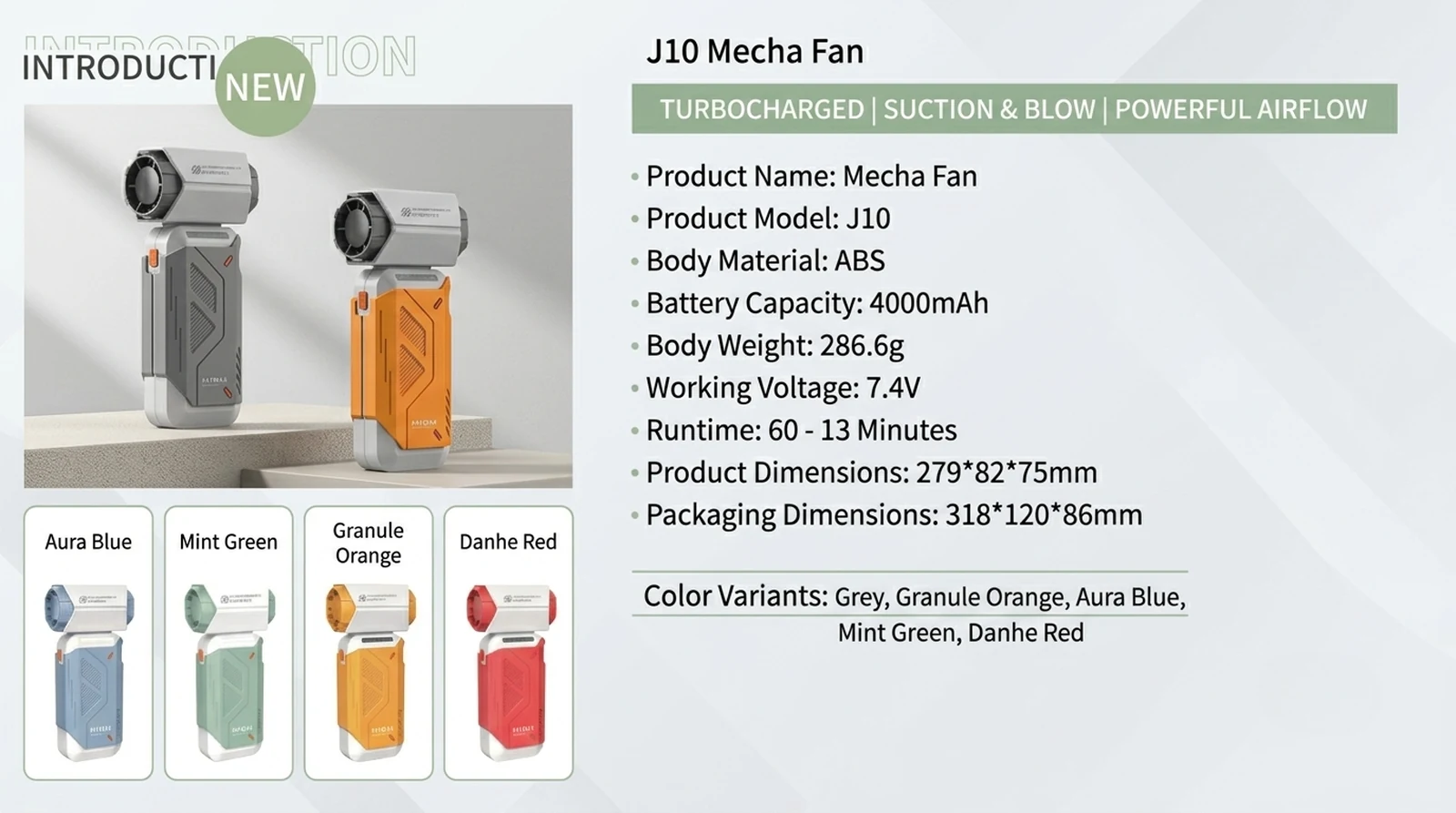
If you are building out a QC workflow for a new portable fan line, the team behind the J10 Mecha Fan has published a detailed walkthrough of inspection sequencing, defect classification, and supplier feedback loops at [jlhy.cc](https://jlhy.cc/products/j10-mecha-fan/). Reviewing how an established OEM partner runs its own checks is a useful reference point when you draft your first QC checklist.
Building Your Own QC Glossary
Before your first PO, draft a one-page QC glossary that defines, in your own words, how your company will use each term. Share it with the supplier and ask them to confirm or amend it. Lock the final version into the purchase contract or a separate quality agreement. This single document will save hours of miscommunication on every subsequent order.
The terms above are a starting point. Add to the glossary as your product line grows: regulatory marks (FCC, CE, UKCA, RoHS), battery shipping classifications, drop-test parameters, and packaging artwork approvals all deserve their own entries once they become routine.

FAQ
What AQL should a first-time importer use for a portable fan order?
A common starting point is AQL 1.0 for major defects, AQL 2.5 for minor defects, and AQL 0 for critical defects, all under ISO 2859-1 sampling. The exact levels should be negotiated with the supplier and recorded in the quality agreement before production begins.
Is a pre-shipment inspection enough, or do I also need during-production inspection?
For small, low-risk orders a single PSI can be enough if the supplier has a strong QC record. For larger, more visible, or first-time OEM projects, a DUPRO at roughly 20–40% completion is highly recommended because it surfaces process issues while there is still time to correct them.
How should I document a defect so the supplier takes action quickly?
Include the inspection date, lot and sample size, the agreed AQL standard, a plain-language defect description, photographs with a reference scale, the severity classification, the quantity affected, and the specific corrective action requested with a deadline. A CAPA response from the supplier should also be requested so the root cause is addressed, not just the symptom.
Frequently Asked Questions
What AQL should a first-time importer use for a portable fan order?
A common starting point is AQL 1.0 for major defects, AQL 2.5 for minor defects, and AQL 0 for critical defects, all under ISO 2859-1 sampling. The exact levels should be negotiated with the supplier and recorded in the quality agreement before production begins.
Is a pre-shipment inspection enough, or do I also need during-production inspection?
For small, low-risk orders a single PSI can be enough if the supplier has a strong QC record. For larger, more visible, or first-time OEM projects, a DUPRO at roughly 20–40% completion is highly recommended because it surfaces process issues while there is still time to correct them.
How should I document a defect so the supplier takes action quickly?
Include the inspection date, lot and sample size, the agreed AQL standard, a plain-language defect description, photographs with a reference scale, the severity classification, the quantity affected, and the specific corrective action requested with a deadline. A CAPA response from the supplier should also be requested so the root cause is addressed, not just the symptom.