How Importers Evaluate Turbocharged Portable Fan Samples in 2026
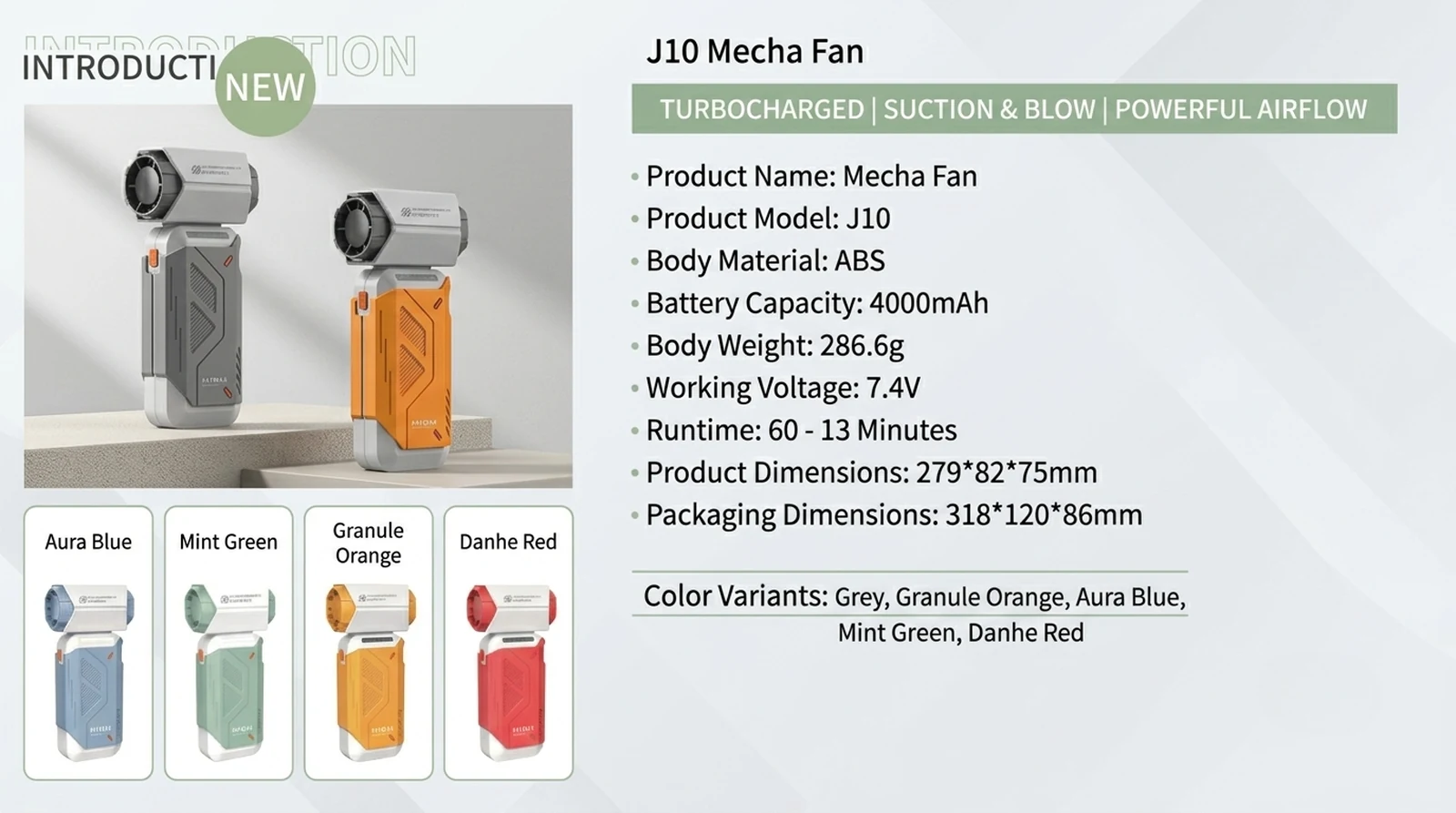

In 2026, the bar for portable fan samples has risen sharply. Importers no longer accept a working unit that meets headline specs; they expect a documented test trail, regulator-ready paperwork, and a clear OEM/ODM roadmap before committing to bulk production. With consumer electronics recalls climbing and retailer QC teams tightening their intake checks, the sample phase has shifted from a quick demo to a structured, multi-stage audit.
Why Sample Evaluation Matters in 2026
The cost of a missed defect on a 5,000-unit run can dwarf the savings of any sample-stage concession. Retailers in Europe and North America are running independent lab verifications on rechargeable products, and a single failed cycle test can trigger an entire shipment hold at the destination warehouse. Buyers who skip structured sample work are now paying for it in chargeback disputes, listing removals, and the sunk cost of replacing tooling that should have been redesigned early.
A rigorous sample process also protects the importer against specification drift between the quote sheet and the bulk run. When the headline specs include aggressive claims like 4000mAh battery capacity, ABS housing, or turbocharged airflow, the sample is the only verifiable proof that the factory can deliver consistently. Treat the sample as a contract artifact, not a sales prop.
Unboxing and First-Impression Inspection
The first 10 minutes with a sample reveal more than most lab tests. Inspect outer carton print quality, inner foam fit, accessory completeness (charging cable, nozzles, manuals), and barcode legibility. For dual-use products like a turbocharged portable fan with suction and blowing modes, every nozzle and seal should be present and matched to the user manual.
Document cosmetic issues immediately: color variance between housing panels, scratches on matte finishes, misaligned USB-C ports, and uneven seams on the ABS shell. These are not minor — they are the same cosmetic criteria that retail QC teams will apply during inbound inspection weeks later. A sample that arrives blemish-free and well-organized is also a leading indicator of how the factory approaches final-pack QC.
Battery Performance and Runtime Testing
Run the unit through a full discharge cycle at each speed setting and record the actual runtime against advertised claims. A 4000mAh lithium pack in a turbocharged portable fan should be evaluated at low, medium, and turbo settings because real-world runtime often drops 20–30% under sustained high-RPM load. Use a USB power meter to verify charging input and confirm the BMS shuts down cleanly at low voltage.
Cycle the battery at least 10–15 times during sample evaluation. Look for capacity fade, swelling, or thermal runaway warnings. Request the cell datasheet and the BMS specification sheet from the factory so you can independently compare advertised capacity against the actual cell used.
Motor Noise, RPM, and Airflow Benchmarks
Turbocharged claims live or die on airflow data. Use a handheld anemometer at the output nozzle and log readings in m/s or CFM at each fan setting. Capture decibel readings at 1 meter with a calibrated SPL meter — anything above 75–80 dB at full turbo will draw complaints from end users and retail reviewers. Brushless motors typically deliver a smoother noise profile and longer life than brushed equivalents at the same RPM.
Hold the unit at full power for 10 minutes and check for motor heat soak, vibration transfer to the housing, and RPM sag under load. A well-engineered turbo fan should maintain consistent airflow without thermal throttling during typical use windows.
Material Quality and Drop Durability
Confirm the housing material matches the spec sheet. For ABS shells like those on the J10 Mecha Fan, perform a controlled drop test from 1.0–1.2 meters onto a hard floor at six angles. Inspect for cracks, fastener loosening, and any deformation around the motor mount. Weigh the unit on a calibrated scale — a sample that comes in noticeably above or below the stated 286.6g target often signals that the BOM was changed without disclosure.
Inspect grip ergonomics, button tactile feedback, and the integrity of any rubberized seals. For dual-use suction and blowing products, the seal between nozzle and housing is a high-stress zone and a common failure point.
Dual-Mode Suction and Blowing Verification
If the product supports both suction and blowing modes, test every advertised use case. Switch between modes repeatedly to check the mode-change mechanism for wear, listen for valve chatter, and confirm that airflow direction actually reverses without leaks at the seal. For blowing mode, measure effective throw distance; for suction mode, measure lift or pickup performance on standardized debris.
A dual-use product that performs well in one mode but poorly in the other is a frequent sample-stage red flag. Document both modes with video and quantitative readings so you have evidence to challenge the factory if bulk production drifts.
Safety and Compliance Documentation
A working sample is only half the import equation. Ask the factory upfront whether they can help obtain CE, FCC, UKCA, RoHS, and REACH documentation, and request copies of recent test reports for similar SKUs. Battery-powered products almost always require UN38.3 certification and an MSDS for cell shipping — without these, the shipment can be refused at the airline or customs level.
Verify report authenticity by cross-checking lab accreditation numbers and report dates. Stale or generic reports are a common cause of customs holds and Amazon listing rejections.
OEM/ODM Customization Readiness
If you plan to private-label or customize the product, the sample stage is when to lock those details. Discuss logo printing areas, color variant availability, packaging artwork adaptation, and accessory kit customization. Confirm whether MOQ starts at 500 or 1000 units and how that threshold interacts with custom tooling or mold work.
A factory with 15 R&D engineers and a documented customization process can absorb small changes without disrupting the production calendar. A factory that treats customization as an afterthought will quote the change in weeks of added lead time.
Lead Time, MOQ Flexibility, and Reorder Logistics
Sample-to-bulk lead time is one of the most underestimated variables in portable fan sourcing. Ask for a written timeline that breaks down tooling, sample confirmation, mass production, and pre-shipment inspection separately. A factory running 150,000+ units per month of personal care appliances typically has shorter queue times than a smaller workshop, but you should still confirm capacity is reserved before paying the sample fee.
Confirm MOQ flexibility — 500 units for early runs and 1000 units for stable replenishment is a common industry structure — and ask how the reorder cycle is handled once the first PO ships.
Common Sample Failure Patterns Importers Should Flag
Three failure patterns show up repeatedly across portable fan audits. First, cosmetic variance between samples and quoted finishes, especially on matte ABS surfaces. Second, documentation gaps: missing UN38.3 reports, expired lab certifications, or no REACH SVHC disclosure. Third, supplier responsiveness — slow replies on sample-stage questions almost always translate into slow handling of bulk-stage issues.
Flag these in writing during the sample phase and tie remediation to the deposit release. A disciplined sample audit compresses risk into the cheapest possible window.
Sample evaluation is moving from a back-office formality into the strategic core of how importers de-risk portable fan programs. The factories that win the next cycle of orders will be the ones that treat samples as evidence, not marketing.
Related Articles
For deeper methodology, see our China fan factory audit checklist for 2026 and our primer on UN38.3 battery certification for importers. On the product side, the J10 Mecha Fan spec deep dive walks through the dual-mode design, and the OEM personal care appliance customization guide outlines typical MOQ and artwork flows.
Frequently Asked Questions
How long should sample evaluation take for a turbocharged portable fan in 2026?
A disciplined sample audit typically runs 10–15 working days, including unboxing, battery cycle testing, airflow benchmarking, drop tests, and documentation review. Rushing the sample stage usually surfaces defects during the first bulk shipment instead.
What is the most commonly missed compliance document for portable fans?
UN38.3 is the single most overlooked document for battery-powered portable fans. Without it, air freight carriers and many customs authorities will refuse or hold the shipment, even if CE, FCC, and RoHS paperwork is complete.
Should importers require dual-mode testing on a suction-and-blowing fan sample?
Yes. Suction-and-blowing products frequently perform well in one mode and poorly in the other. Run standardized tests in both modes, record airflow or pickup data, and document any leaks, mode-switch chatter, or RPM sag under load before approving the sample.