What "Private Label Packaging" Actually Covers
In the personal care appliance category, "private label" typically refers to a factory-produced item that an importer sells under its own brand identity. The hardware itself is only half of the equation. The packaging is what the buyer sees on the shelf, what the buyer's logistics team measures against retailer compliance guidelines, and what the end consumer photographs when they post a product review. Treating the box as an afterthought is one of the most common mistakes new importers make in their first production run.
Private label packaging, when properly scoped, covers several layered components:
- Structural tiers — the individual retail unit (often called the "gift box" or "color box"), an optional inner tray or molded pulp insert, and the master carton used for shipping pallets.
- Decorative tiers — printed artwork on the box, shrink sleeves, belly bands, hangtags, stickers, and instruction leaflets that allow brand expression without redesigning the structural pack.
- Compliance and merchandising copy — barcode placement, regulatory marks, multilingual instructions, ingredient or material declarations, and retailer-specific panel layouts.
A useful working definition: the structural pack protects the unit during transit; the decorative tier carries the brand voice; the compliance tier protects the importer from regulatory friction and retailer chargebacks. Treating all three as one integrated deliverable is the first step toward a smooth launch.
Logo, Color, and Finish: Where Brand Decisions Live
Most of the visible brand work happens in the first three weeks of the packaging development cycle, before any physical samples are produced. Three decisions drive the look and feel of the final box.
Logo placement and clear space
The brand mark should anchor a primary panel — usually the front face — with consistent clear space on every side. For personal care appliances, the front panel has a lot of competing visual content: product hero, key feature callouts, application imagery, capacity or wattage markings, and barcode or regulatory icons. A general rule among packaging designers is to keep the logo area to roughly one fifth of the front face and to avoid running adjacent text closer than the height of the logo's tallest letter. This is something to specify in writing with the supplier before dieline artwork begins, because late-stage logo repositioning can force changes to other printed elements.
Color matching across substrates
Color is where private label projects most often stumble. A Pantone reference chosen on a computer screen will not match a printed CMYK box exactly, and it will not match a molded plastic housing either. Mature importers build a small library of Pantone-coated references for paperboard, a separate set for offset printing, and a third set for any sprayed or molded plastic components. Suppliers should be asked to submit a color proof — either a printed press sheet or a calibrated digital proof — for sign-off before mass production. Skipping the proof step is the leading cause of reprints in this category.
Finishing options
Finishes communicate perceived value more than any other packaging element. The most common choices for personal care appliance boxes are:
- Matte lamination — soft, modern, hides fingerprints, well-suited to minimalist branding.
- Gloss lamination — high shine, more saturated colors, traditional retail look.
- Soft-touch coating — premium feel, slightly higher unit cost but widely used in mid-tier personal care.
- Spot UV — selective gloss over a matte field to highlight a logo or feature icon.
- Foil stamping — metallic accents, often gold or silver, used sparingly on hero products.
- Embossing or debossing — raised or recessed logos; effective for tactile branding but adds tooling lead time.
A practical recommendation is to choose one hero finish and keep the rest of the box clean. Two competing finishes on the same panel usually reads as busy rather than premium.
Packaging as a Retail Onboarding Tool
For importers aiming at brick-and-mortar retail, the box is also a compliance document. Several of the most common onboarding failures trace back to packaging decisions made months earlier.
Barcodes, GTINs, and shelf readiness
Every retail-bound SKU needs a globally recognized GTIN (encoded as a UPC-A or EAN-13 barcode) printed in a specific location with a defined quiet zone and minimum size. Many retailers require the barcode on multiple panels for redundancy at the point of sale. Importers who have not yet secured a GS1 prefix should do so well before artwork is locked, because the encoded numbers feed back into artwork files. Changing barcodes after press is extremely expensive.
Retailer compliance panels
Larger retailers publish vendor compliance manuals covering font sizes for ingredient declarations, country-of-origin marking, recycling symbols, and minimum panel dimensions. Even when targeting independent retailers or specialty channels, importers should review at least one major retailer compliance document, because it forces decisions that scale across channels. A packaging layout that satisfies a strict retailer's rules will usually satisfy everyone.
Master cartons and club-pack configurations
Master cartons are the corrugated shippers that hold a fixed number of retail units — typically four, six, or twelve. They must be sized to the retailer's pallet program and labeled with a separate master-carton barcode (an ITF-14 is common). Some categories also support a club pack, where two or four retail units are banded together for warehouse clubs; this requires a separate outer wrap and a separate SKU.
Materials, Sustainability, and Regulatory Signals
Sustainability is no longer a differentiator; it is a baseline expectation. Buyers, regulators, and retailers all push for clearer material signals, and packaging is where those signals become visible.
Paperboard vs corrugated
The retail unit for personal care appliances is almost always folding carton board — typically SBS (solid bleached sulfate) for premium finishes or CCNB (clay-coated news back) for budget tiers. The master shipper is corrugated, usually B-flute or E-flute, sized to protect the retail units during ocean freight. For heavier appliances such as full-size hair dryers, double-walled corrugated is worth specifying to reduce damage rates.
Recycled content and chain of custody
If the brand wants to make a recycled-content claim, the paper mill and printer must be able to provide documentation — typically a chain-of-custody certificate. Buyers should be cautious about unverified claims: in many markets, making a "recyclable" or "recycled" statement without supporting documentation can trigger regulatory action. Ask the supplier which certifications their paper source holds, and request the certificate numbers rather than relying on verbal confirmation.
Bioplastics and reduced-plastic claims
For window patches, blister inserts, or molded trays, bio-based or recycled-content plastics are increasingly available. The trade-off is usually clarity and cost, and the regulatory wording for these claims varies by market. Importer-side legal review is well worth scheduling before claims appear on retail-facing artwork.
What to Align With Your Supplier Early
Packaging development has more hidden dependencies than almost any other workstream in an import project. The following items should be agreed in writing at project kickoff.
- Artwork files and dielines. The supplier should provide a dieline (a flat template of the box with cut lines and fold lines) for the importer's graphic designer. CMYK working files at the dieline's exact dimensions are standard.
- Pantone references and color proofs. Submit a Pantone list and request a printed or digital proof for sign-off.
- Sample approvals. Three rounds of physical samples are common: a paper or substrate sample, a printed proof sample, and a finished retail sample with the product inside.
- Lead times and revision windows. Structural dieline revisions are slow and expensive; print revisions on a locked dieline are faster. Agree in advance how many revision rounds are included.
- Master carton specs. Inner pack count, flute type, burst strength, and pallet pattern should be locked before production, not after.
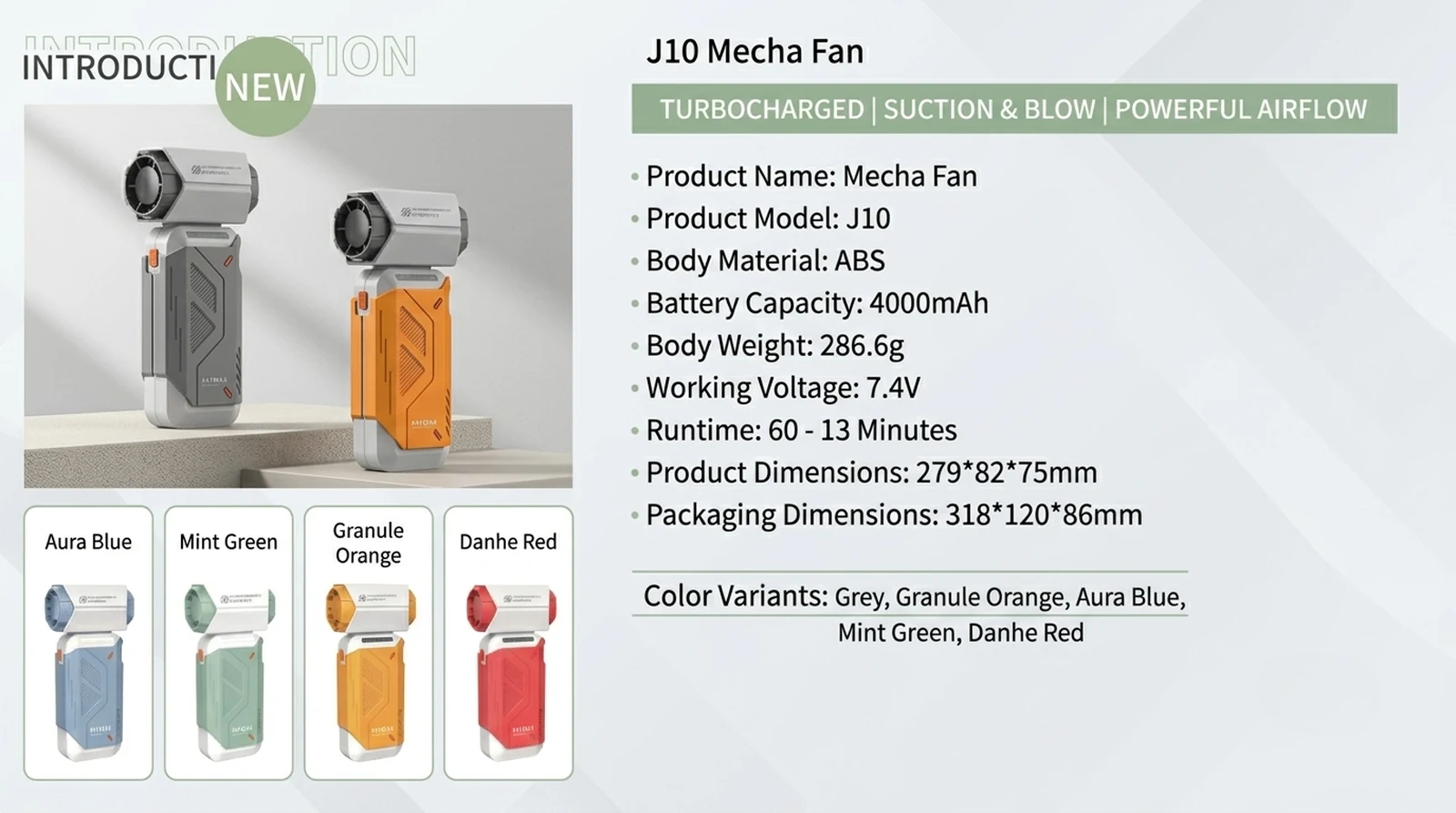
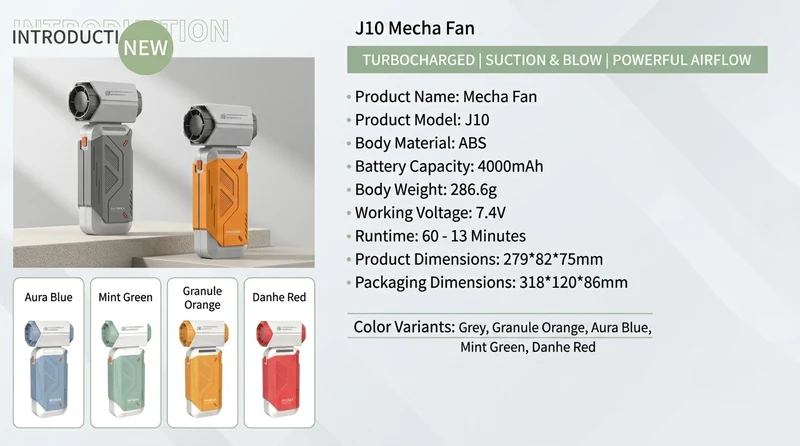
For importers who want a single point of coordination rather than managing a printer, a structural designer, and a fulfillment house separately, working with an experienced private-label partner can simplify the timeline considerably. The J10 Mecha Fan, for example, ships as a self-contained retail-ready unit with master cartons sized for standard pallet programs — a useful reference point when scoping similar SKUs.
Where to Get Packaging Support
The fastest way to avoid rookie errors is to walk through a real, on-shelf example. Browsing the J10 Mecha Fan product page at jlhy.cc gives a clear picture of how a finished private label unit reads in retail photography, what the printed panels contain, and how the inner tray holds the appliance and accessories in place. Importers in early scoping can use that unit as a benchmark for dieline complexity, copy-block density, and master carton labeling.
When you are ready to brief your own project, jlhy.cc is also a useful starting point for asking structured questions about artwork file preparation, Pantone workflows, and retailer compliance panels before committing to a printer.
Frequently Asked Questions
What is the difference between private label and white label packaging?
White label packaging refers to generic packaging supplied by the manufacturer, usually with a neutral design that any buyer can adopt with minor edits. Private label packaging is built to the importer's specifications — brand colors, finishes, copy blocks, and compliance layout — and is not shared with other buyers of the same product.
How long does a typical packaging development cycle take?
For a folding-carton retail unit, a realistic timeline from kickoff to mass-production samples is six to ten weeks, assuming artwork is ready and Pantone references are provided. Add two to four weeks for tooling if you are also specifying a custom inner tray or a structural dieline that does not yet exist.
Can I bring my own artwork files, or does the supplier provide them?
Both paths are common. Mature private-label suppliers can either produce artwork in-house or work from importer-supplied CMYK files built to their dieline. The importer is responsible for ensuring the dieline is correct, the fonts are licensed for commercial use, and any licensed imagery has the appropriate usage rights.
What certifications should I ask a packaging supplier about?
The most commonly requested are FSC or PEFC chain-of-custody for paperboard, ISO 9001 for quality management at the converter, and any market-specific marks required by your retailer such as recycling symbol conformance or restricted-substance compliance (for example, heavy-metal limits on inks and coatings). Always request certificate numbers and verify them with the issuing body.
How do I avoid retailer chargebacks for packaging non-compliance?
The single most effective step is to obtain the retailer's vendor compliance manual at the start of the project and treat it as a checklist. Common chargeback triggers include barcodes in the wrong location, missing or incorrect country-of-origin marks, panel sizes that fail minimum dimensions, and master cartons that do not conform to the retailer's pallet pattern.
This is an independent editorial content site. For product specifications and OEM/ODM inquiries, visit Xinmeili Technology.
Continue exploring